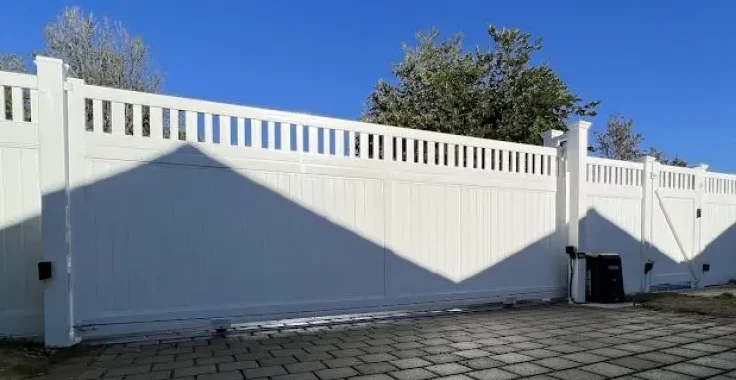
Our gate repair company is well known throughout Los Angeles for delivering exceptional workmanship and dependable service. Over the years, we have earned the trust of homeowners and businesses alike through consistent quality, professionalism, and outstanding customer care.
Your automatic gate motor rarely fails without warning. In our years of serving Los Angeles homeowners from Beverly Hills to Van Nuys, we’ve found that gate motor failures almost always follow a predictable pattern — weeks or months of small, easy-to-ignore symptoms before a complete breakdown. The problem is that most homeowners don’t recognize the early signs until the gate is stuck open (or shut) at the worst possible moment.
This guide covers the 8 most reliable warning signs that your gate motor is heading toward failure — and what to do about each one before you’re calling for emergency service.
8 Warning Signs Your Gate Motor Is About to Fail
1. The Gate Is Moving Slower Than Usual
A healthy gate motor opens and closes your gate at a consistent speed. If you’ve noticed your gate has gradually become sluggish over the past few weeks or months, that slowdown is the motor working harder than it should. Common causes include worn drive gears, a deteriorating capacitor, a chain or belt that needs lubrication, or a motor that’s beginning to lose power output.
What it means: Left alone, a slow gate motor typically progresses to intermittent operation, then complete failure — often within 2–6 months of first noticing the slowdown.
What to do: Call for a diagnostic. In many cases, lubrication and minor adjustments restore full speed. If it’s a failing capacitor, replacement costs $80–$180 and takes under an hour — far cheaper than a full motor replacement.
2. The Gate Reverses Unexpectedly Mid-Travel
If your gate starts opening or closing and then suddenly reverses direction for no apparent reason, the motor’s logic board is receiving a fault signal. This can come from an obstruction sensor detecting something (real or false), a limit switch that’s drifted out of calibration, a failing control board, or voltage fluctuations in the power supply.
What it means: Intermittent reversals that start happening more frequently are a strong indicator that either the control board or the sensors are on their way out.
What to do: Check that nothing is physically blocking the sensor beam path (leaves, spider webs, and debris are the most common culprits in Los Angeles, especially after Santa Ana wind events). If the path is clear and the problem persists, have the limit switches and control board inspected.
3. You’re Hearing New Grinding, Squealing, or Clicking Sounds
A gate motor in good condition operates with a consistent, relatively quiet mechanical sound. New or worsening noises are never normal — they’re your motor communicating stress:
Grinding: Usually worn gears, a misaligned drive arm, or metal-on-metal contact in the gate track
Squealing: Dry bearings, a belt that needs replacement, or rollers on a sliding gate that need lubrication
Clicking or popping: Often a failing capacitor, loose wiring connection, or debris in the drive mechanism
Banging at end of travel: Limit switches out of calibration — the gate is hitting a hard stop instead of slowing to a controlled stop
What to do: Don’t ignore new sounds. Noise that started recently is easier and cheaper to address than noise that’s been going on for months with damage compounding over time.
4. The Gate Only Works Sometimes (Intermittent Operation)
Intermittent failure — where the gate works fine three times in a row and then refuses to respond — is one of the most frustrating gate problems and one of the clearest signs of impending motor failure. It usually points to a failing control board, a heat-related issue (motors that fail when warm but work when cool), failing wiring connections, or a deteriorating receiver board.
What it means: Intermittent failures almost never “fix themselves.” The intervals between failures get shorter over time until the gate stops working entirely.
What to do: Note the pattern — does it fail after extended use (heat-related)? After rain? In the morning but not afternoon? This information helps our technicians narrow down the root cause quickly during a diagnostic visit.
5. The Remote Range Has Dramatically Decreased
If you used to be able to trigger your gate from the street and now you have to be practically at the gate before it responds, the problem could be the remote’s battery — but if a fresh battery doesn’t fix it, the receiver or antenna on the gate operator may be failing. A failing control board can also reduce receiver sensitivity before failing entirely.
What to do: Replace the remote battery first. If range doesn’t improve, have the receiver and antenna inspected — antenna cable damage (rodent chewing is surprisingly common in Woodland Hills and Calabasas) is a frequent and inexpensive fix.
6. The Gate Is Straining or Lurching on Startup
If your gate jerks, hesitates, or seems to struggle before beginning to move — especially in the morning or during cold weather — the motor’s starting capacitor is likely failing. The capacitor provides the burst of power needed to start the motor moving against the weight of the gate. A weak capacitor means the motor struggles to start, which puts enormous stress on the gear train and motor windings each cycle.
What it means: Capacitor failure is one of the fastest ways to destroy an otherwise healthy motor — the sustained starting strain burns out motor windings. Address it early.
What to do: Capacitor replacement is one of the most cost-effective gate motor repairs, typically $80–$180 including labor. It extends motor life significantly.
7. You Notice Visible Damage or Corrosion on the Motor Housing
Physically inspect your gate motor housing periodically — ideally twice a year. Warning signs include rust or corrosion on the casing (especially for operators in coastal areas like Santa Monica and Pacific Palisades where salt air accelerates deterioration), cracked or brittle wiring insulation, water intrusion stains inside the housing, or a burning smell near the unit after operation.
What to do: Physical corrosion and water intrusion damage are not repairable — they indicate it’s time for a full motor replacement before the damage extends to the control board and wiring, which would significantly increase total repair cost.
8. The Motor Is Running But the Gate Isn’t Moving
This is the most advanced warning sign — when you hear the motor running (humming or cycling) but the gate doesn’t move at all. This means the motor has fully decoupled from the gate mechanism, either because the drive arm has disconnected or broken, the gear train has stripped, or the chain or belt has snapped.
What to do: Stop cycling the motor immediately — continuing to run it in this state will burn out the motor windings. Call for emergency service. Depending on the cause, this may be a same-day repair (broken drive arm, snapped chain) or require a full operator replacement (stripped gears, burned motor).
Gate Motor Repair vs. Replacement — When to Do What
Symptom
Likely Fix
Typical Cost
Repair or Replace?
Slow operation
Lubrication, capacitor
$80–$250
✅ Repair
Random reversals
Sensor/limit switch adjust
$120–$300
✅ Repair
Grinding noise
Gear/drive arm repair
$150–$400
✅ Repair
Intermittent failure
Control board replacement
$250–$700
✅ Repair if under 10 yrs
Startup lurch/strain
Capacitor replacement
$80–$180
✅ Repair
Motor over 12–15 years old
Full operator replacement
$900–$2,500
🔄 Replace
Visible corrosion / water damage
Full operator replacement
$900–$2,500
🔄 Replace
Motor running, gate not moving
Drive arm / gear / motor
$200–$2,500
Diagnose first
How to Extend Your Gate Motor’s Life
Lubricate annually: The drive chain, rollers, hinges, and arm joints on your gate system should be lubricated with a silicone-based spray or white lithium grease once a year — more often in dusty or coastal areas.
Clear sensors regularly: Wipe down safety sensor lenses monthly and clear debris from the sensor path after every wind event. Los Angeles’s fire-season winds fill sensor beams with dust and plant matter faster than you’d expect.
Don’t ignore new sounds: Early intervention on a grinding or squealing gate motor almost always saves money vs. waiting until failure.
Test the manual release: Know where your manual release handle is and test it twice a year. During a power outage or motor failure, being able to open your gate manually is critical — especially for homes in fire-evacuation zones in Calabasas, Woodland Hills, and the hillside communities.
Install a battery backup: A battery backup unit keeps your gate operating during power outages. For under $500 installed, it’s one of the best investments a Los Angeles homeowner can make for gate reliability.
Annual professional inspection: Have a licensed technician inspect your gate system once a year. We check motor health, limit switch calibration, drive mechanism, wiring, and sensors — catching small issues before they become expensive failures.
Silence Garage Door & Gates — Gate Motor Repair & Service in Los Angeles
If you’ve noticed any of the warning signs above, don’t wait for a full failure. Our licensed technicians serve all of Los Angeles — including Beverly Hills, Calabasas, Woodland Hills, Studio City, Van Nuys, Reseda, Glendale, Burbank, and Santa Monica — with fast, same-day diagnostic service.
Frequently Asked Questions — Gate Motor Failure Signs
How long do gate motors typically last in Los Angeles?
Most residential gate operators in Los Angeles last 8–15 years with regular maintenance. High-use installations (commercial properties, HOA-managed gates, homes with multiple daily users) may need replacement in 6–10 years. Coastal properties near Santa Monica and Pacific Palisades typically see shorter motor life due to salt-air corrosion.
Is it worth repairing a gate motor or should I just replace it?
If the motor is under 10 years old and the fault is an isolated component — capacitor, control board, drive arm, sensor — repair is almost always the better value. If the motor is over 12 years old, has multiple failing components, or repair costs exceed 60% of a new unit’s price, replacement is the smarter long-term choice. We give you an honest assessment during our diagnostic.
Can I lubricate my gate motor myself?
You can safely lubricate the drive chain, rollers, and hinges yourself using a silicone spray or white lithium grease. Do not use WD-40 on gate components — it’s a solvent, not a long-term lubricant, and attracts dirt. For motor internals, control board connections, and limit switches, leave those to a licensed technician.
My gate motor runs but the gate doesn’t move. What’s wrong?
The most common causes are a disconnected or broken drive arm, a stripped gear, or a snapped drive chain or belt. Stop running the motor immediately to avoid burning out the motor windings. Call (888) 261-9976 — this is repairable in most cases and our technicians carry common drive components on every truck.
How do I open my gate manually when the motor fails?
Most gate operators have a manual release handle — typically a red cord or a small lever near the motor housing. Pulling this disengages the drive mechanism and allows you to push/slide the gate manually. If you’re unsure where your manual release is, call us and we’ll walk you through it. We also recommend testing your manual release twice a year so it works when you need it most.
Hearing Something Wrong With Your Gate?
Don’t wait for a full failure. Call Silence Garage Door & Gates for a same-day diagnostic anywhere in Los Angeles.
Licensed #1079396 · Insured · 24/7 Emergency Service · All Brands