Silence Garage Door & Gates builds and installs new driveway gates across Los Angeles and the San Fernando Valley. We fabricate in our own shop in Reseda, set the posts and foundations, run the electrical, hang the gate, fit the operator and commission the safety equipment, so one company carries the job from the first measurement to the finished entrance. We are licensed, bonded and $2M insured, and we hold California contractor license CSLB #1079396. Call (888) 261-9976, or text or WhatsApp (818) 441-2995 with a photo of the opening and we will tell you what is possible. 24/7 Emergency Dispatch.
What Goes Into a Gate Installation
A gate that still runs smoothly in ten years is decided long before anyone welds anything. Most of the gates we are called out to rescue were not badly built so much as badly planned, hung on posts that were never deep enough or driven by an operator that was never sized for the weight. Our installations follow the same order every time.
Survey and measurement
We measure the opening, check the slope and fall of the driveway, look at where the gate can stack when it is open, and find the power. Slope is what decides whether a driveway can take a swing gate at all, and how much ground clearance a sliding gate needs before it starts catching in winter. We also check what the gate has to clear on the inside, because a gate that fouls a parked car or a planter on its way open is a gate you stop using.
Design, materials and finish
We work in iron, steel, aluminum and wood, and in combinations of them. Horizontal slat, vertical slat, picket, square mesh, solid board and open lattice all behave differently in wind and all age differently in the sun. We prime and paint in house so the finish is ours to stand behind; powder-coating is the one finish we send out to a specialist. Where a design calls for wood infill we use hardwoods that hold up outdoors, such as Kayu Batu golden Balau, set into a steel frame rather than relying on the timber for structure.
Fabrication in our own shop
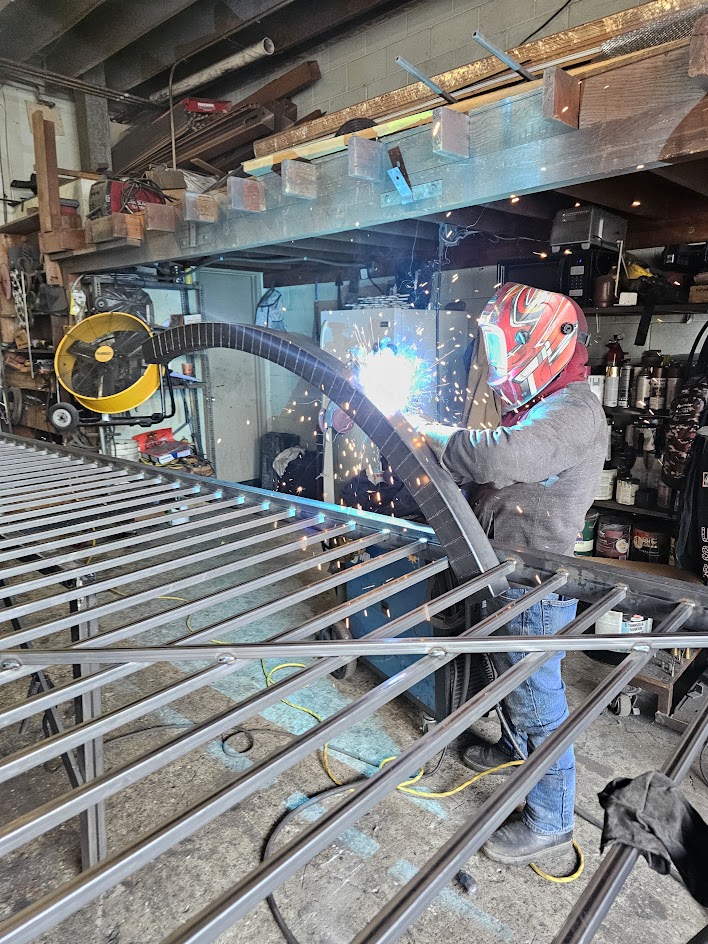
The gate is cut, welded, ground and finished on our own benches, not ordered in as a kit and bolted together on your driveway. That is what makes a genuinely custom size possible, and it is why an odd opening, a curved wall or a driveway that falls away to one side is a design question rather than a reason to say no.
Posts, foundations and electrical
Gate posts carry a great deal of moving weight and take the shock every time the gate stops. We set them in concrete footings sized for the leaf they carry. Sliding gates get a level, properly bedded track or a cantilever rail; swing gates get hinges matched to the leaf weight. We run the electrical to the operator and to the intercom or keypad, in conduit, as part of the same job.
Operator, safety and commissioning
The operator is sized to the actual weight and length of the gate you are getting, not to a catalog average. We fit photo-eye safety sensors, set the limits and the obstruction sensing, install the receiver and remotes, and test the gate through a full cycle before we leave. Where you want a battery backup so the gate still opens in an outage, that is fitted and tested at the same time.
New Sliding Driveway Gates
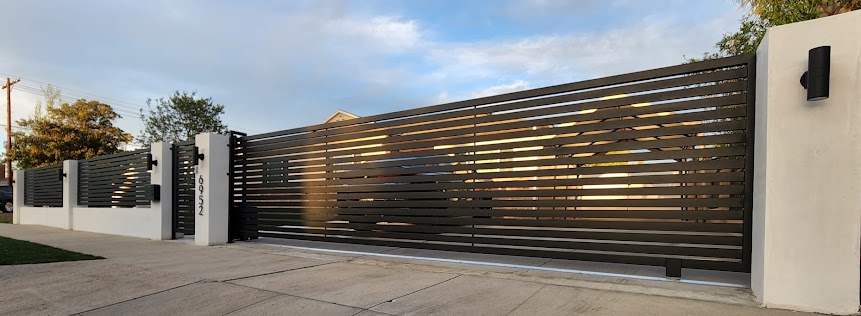
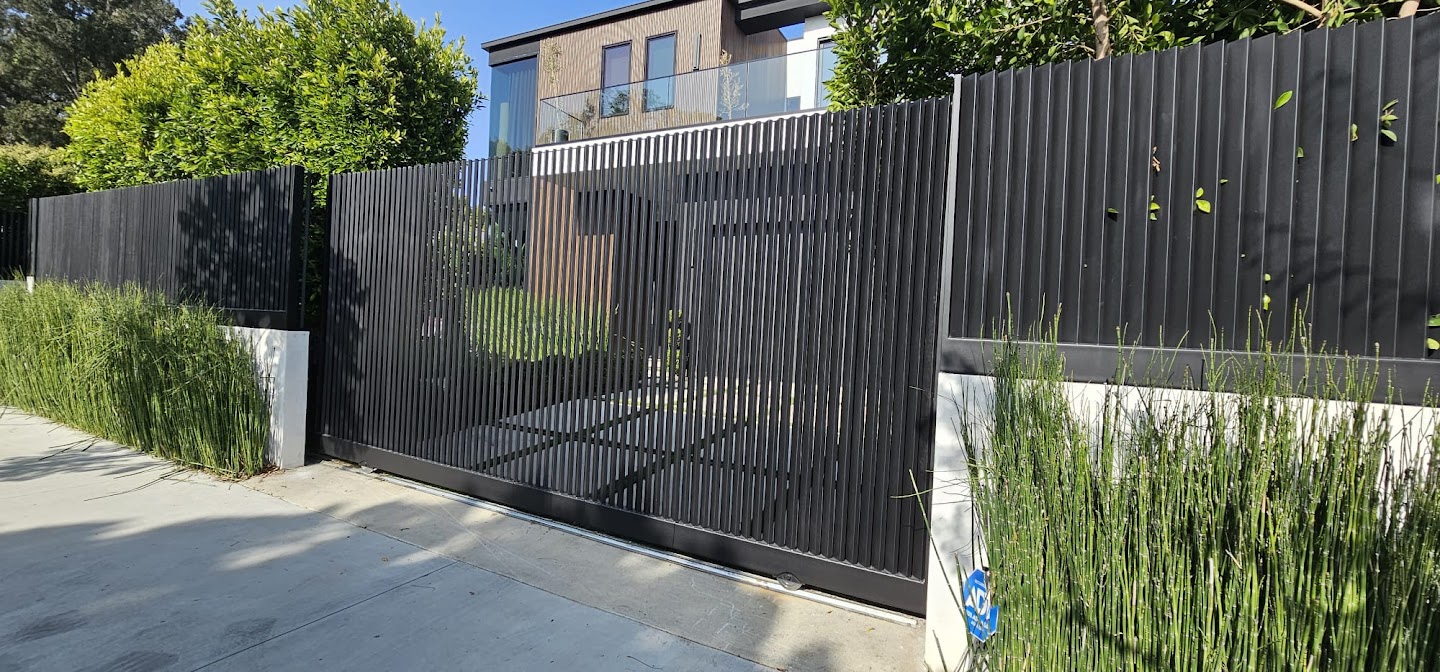
A sliding gate is usually the right answer where the driveway is short, slopes upward from the street, or where a swing gate would sweep across parking. It needs somewhere to stack when it is open, so we look for a clear run along the fence line before recommending it. We build both rolling gates on a ground track and cantilever gates that carry their own weight on a rail and leave the driveway surface clear, which suits driveways that pool water at the gate line. Telescopic gates, where two or three leaves stack together, let us cover a wide opening where there is not enough side room for a single leaf.
New Swing Driveway Gates
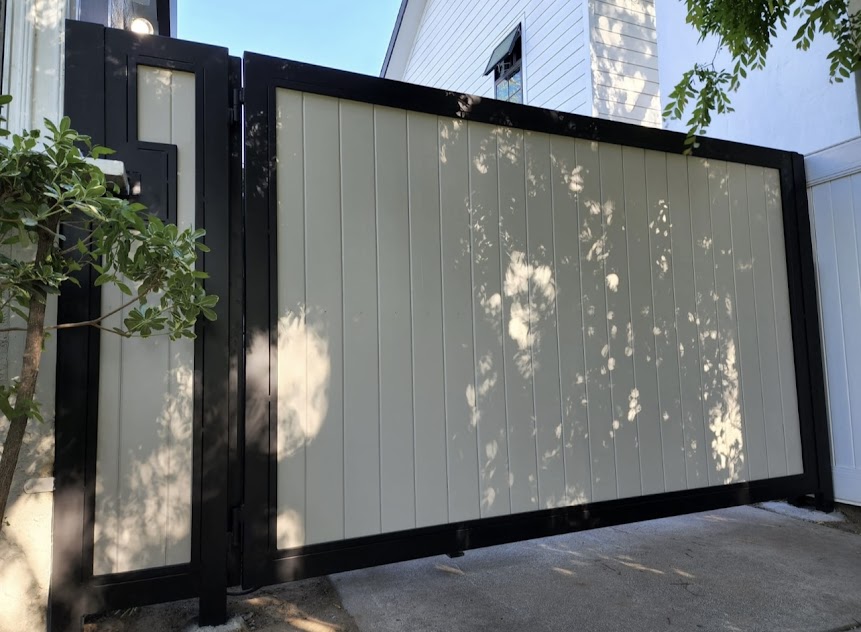
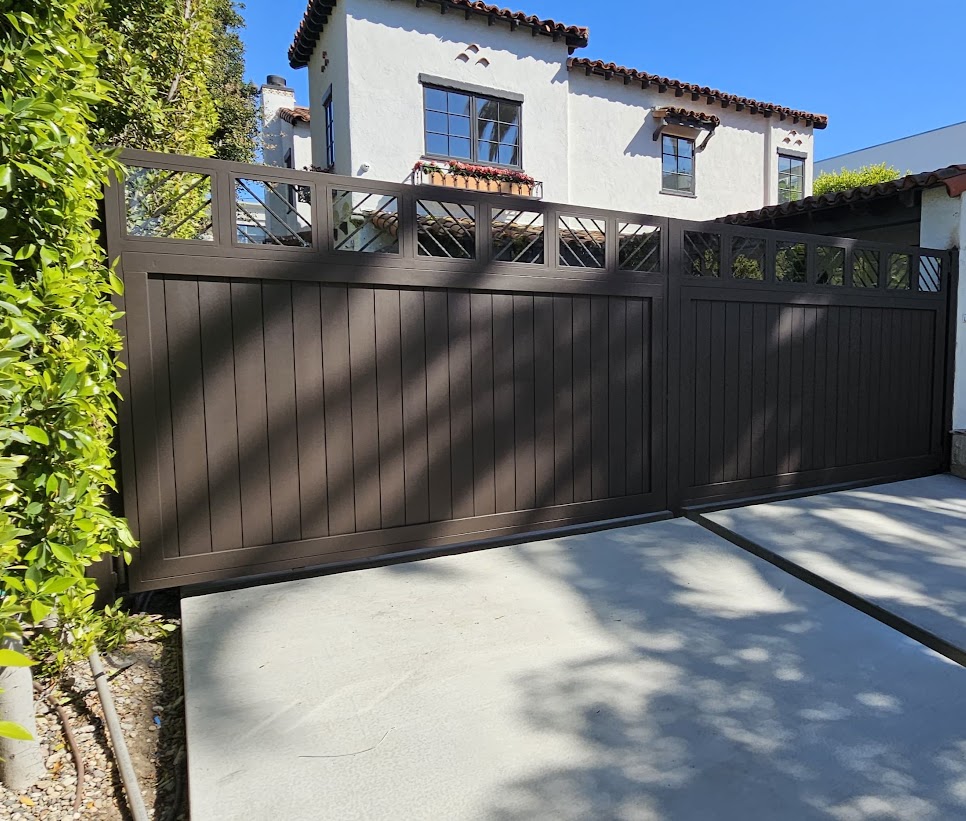
Swing gates suit level driveways with room to open inward, and they carry heavier decorative designs comfortably. Single leaves work up to a moderate width; beyond that a dual swing pair keeps each leaf short enough to stay true and puts less strain on the hinges and posts. Where a driveway rises from the street, we can build in rising hinges or set the gate back so it clears the grade, which is a design decision that has to happen before fabrication rather than after.
Gate Openers and Operators We Install
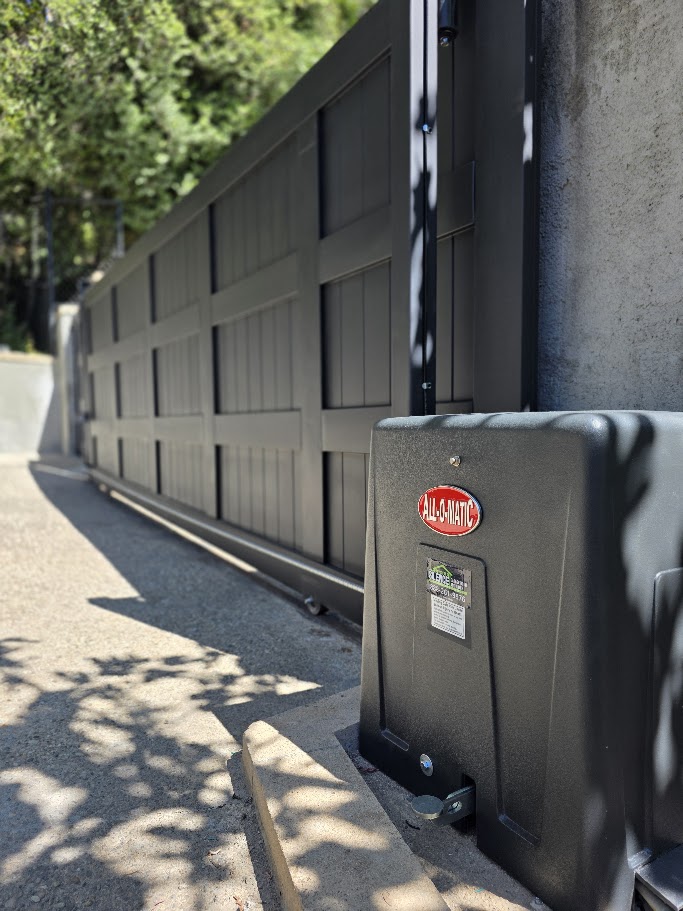
We are an Authorized Dealer for LiftMaster and All-O-Matic, and those are the two lines we install most. On residential sliders we regularly fit the All-O-Matic SL90 DC and SL100 AC; on dual swing gates the LiftMaster LA500; and on heavier or higher-cycle commercial and HOA sliders the LiftMaster CSL24UL. For a flush garage door alongside a new gate we install LiftMaster jackshaft openers, which mount on the wall beside the door and keep the ceiling clear.
We also install and service Ramset, FAAC, DoorKing, Viking, BFT, HySecurity, Eagle, Linear and Mighty Mule operators. Those are brands we work on every week, but we do not describe ourselves as a dealer for them, because we are not. If you have a preference, or you are matching an operator you already have elsewhere on the property, tell us and we will quote it that way.
Custom Fabrication and Ironwork
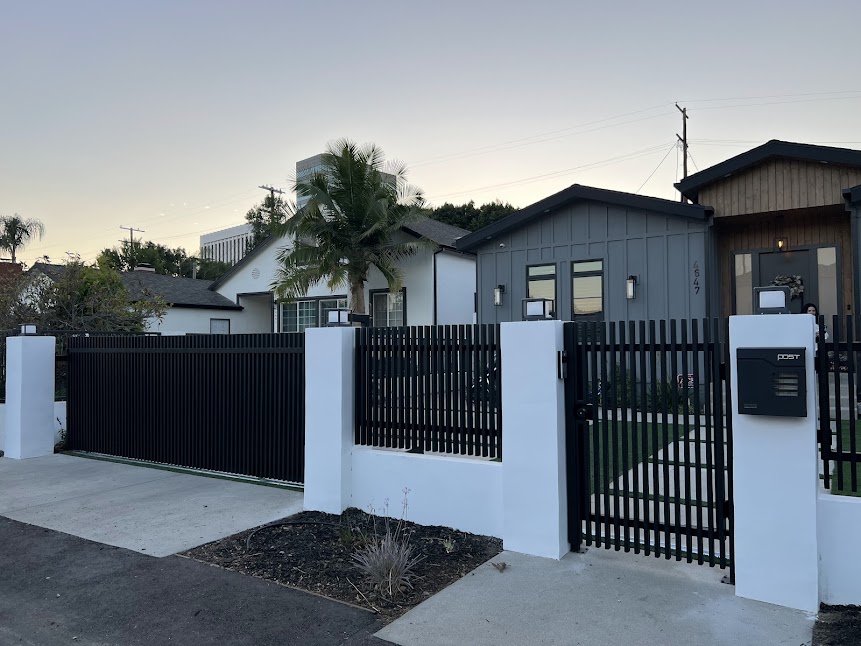
Because the gate is made here, the design is not limited to what fits in a catalog. We build square-top and arched frames, mixed panels that combine metal with wood or glass, matching pedestrian gates, and fencing that continues the same pattern along the frontage. We also fabricate the parts that make an entrance look finished rather than assembled: post caps, mailbox surrounds, column cladding and the trim that hides the operator and the conduit.
New Fencing and Full Entrances
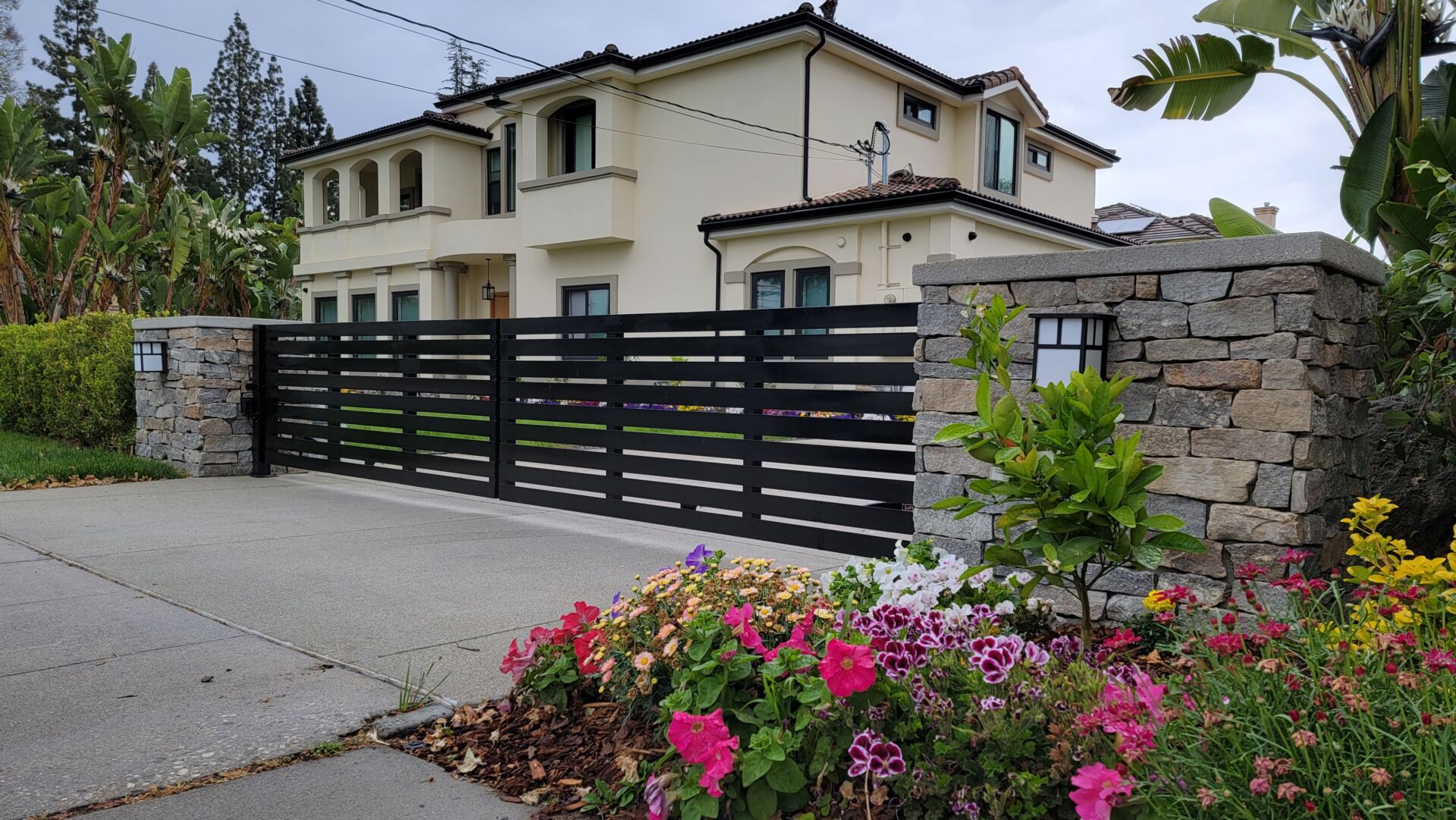
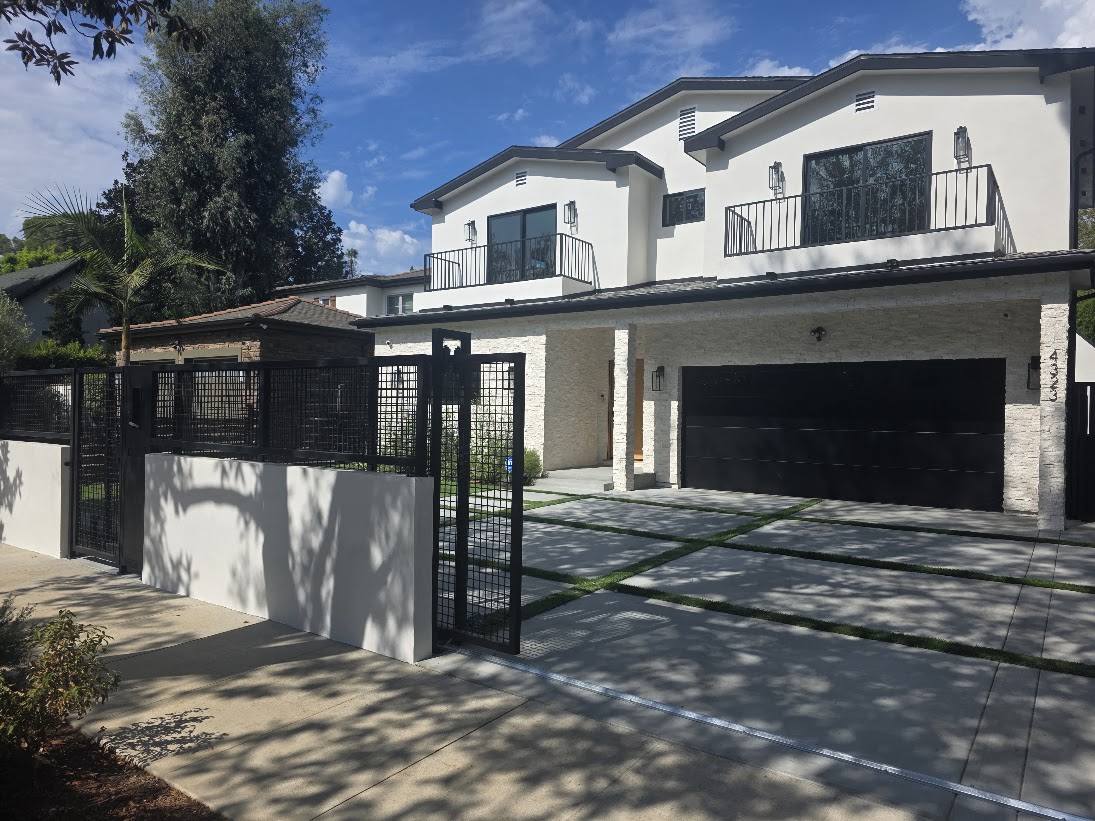
Most of the installations we are proudest of are not a gate on its own. They are a frontage: a block wall with smooth-stack columns, column lights, a driveway gate, a matching pedestrian gate, fencing that carries the same pattern, an intercom at the post and a mailbox that belongs to the design. We install iron, metal, wood and aluminum fencing, and we can match new fencing to a gate you already have, or match a new gate to fencing that is staying.
Intercoms, Keypads and Access Control
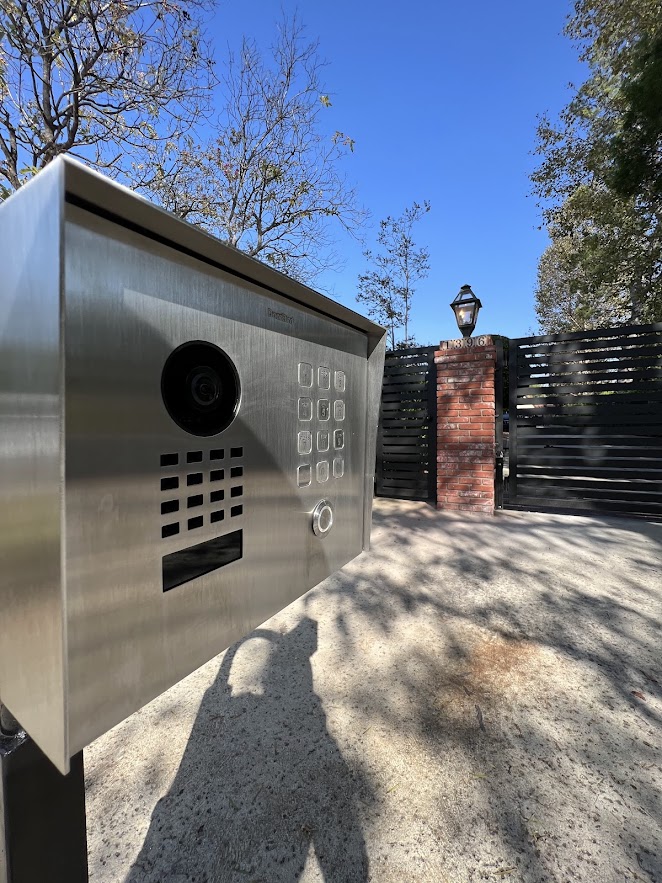
We install and repair access control as part of the gate job rather than as an afterthought, which means the conduit is in before the concrete goes down. We fit DoorBird video intercoms and DoorKing intercoms, keypads, wireless and hardwired call buttons, receivers, remotes and safety loops. Getting the intercom position right matters more than people expect: it has to be reachable from a car window, at the right height, and far enough back from the gate that a visitor is not sitting in the road while they wait.
Where We Install Gates in Los Angeles
We install across Los Angeles and the San Fernando Valley, including Sherman Oaks, Studio City, Beverly Hills, Bel Air and Brentwood, and we are based in Reseda. Residential driveways, HOA and multi-unit entrances and commercial yards are all work we do. Send a photo of the opening to (818) 441-2995 by text or WhatsApp, or call (888) 261-9976, and we will tell you what we would build. You can also contact Silence Garage Door and Gates or look through our recent gate and garage door work.
Gate Installation Questions, Answered
How long does a new gate installation take?
Every job runs in the same order: survey and measure, then fabrication in our shop, then installation and commissioning on site. We give you the schedule after the survey, once we know the size, the material and what the posts and electrical need, rather than quoting a number before we have seen the opening.
Do you build the gate yourselves, or order it in?
We build it. The gate is cut, welded, ground, primed and painted on our own benches in Reseda. That is what lets us match an exact opening and a specific design instead of working around a stock size. Powder-coating is the one finish we send out to a specialist.
Sliding or swing, which one suits my driveway?
It comes down to slope and space. A sliding gate suits a short driveway, a driveway that rises from the street, or one where a swinging leaf would sweep across parking, but it needs a clear run to stack into. A swing gate suits a level driveway with room to open inward and carries heavier decorative designs well. We tell you which we would build after we have measured.
What materials can a new gate be made from?
Iron, steel, aluminum and wood, and combinations of them. Horizontal slat, vertical slat, picket, square mesh, solid board and open lattice are all designs we build regularly, and we can set hardwood infill such as Kayu Batu golden Balau into a steel frame so the timber is not carrying the structure.
Which gate openers do you install?
We are an Authorized Dealer for LiftMaster and All-O-Matic, and we install those most: the All-O-Matic SL90 DC and SL100 AC on sliders, the LiftMaster LA500 on dual swing gates and the LiftMaster CSL24UL on heavier commercial and HOA sliders. We also install and service Ramset, FAAC, DoorKing, Viking, BFT, HySecurity, Eagle, Linear and Mighty Mule.
Do you handle the electrical and the concrete work?
Yes. We set the post footings, bed the track or rail, and run the electrical to the operator and to the intercom or keypad in conduit as part of the same job, so you are not coordinating separate trades around one entrance.
Can you match a new gate to my existing fence?
Yes, and the other way round. We can build a gate that picks up the pattern, spacing and color of fencing that is staying, or build new fencing that continues the line of a gate you already have. Bringing us a photo of what is already there is the quickest way to start.
Is a new installation covered by a warranty?
New installations carry one year on labor and one year on the parts we supply, and equipment also carries its own manufacturer limited warranty, which varies by model. The full terms are set out on our warranty page and are printed at the bottom of every invoice.
Gate Installation Work Across Los Angeles