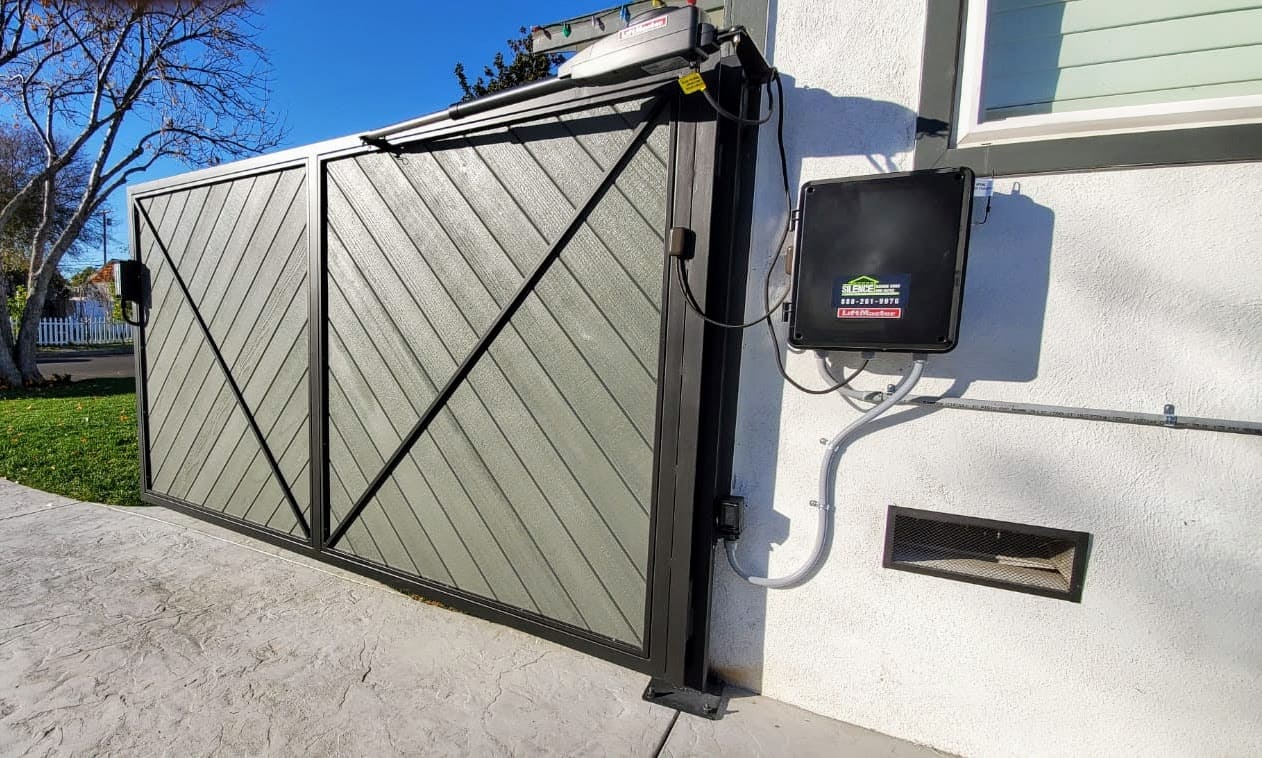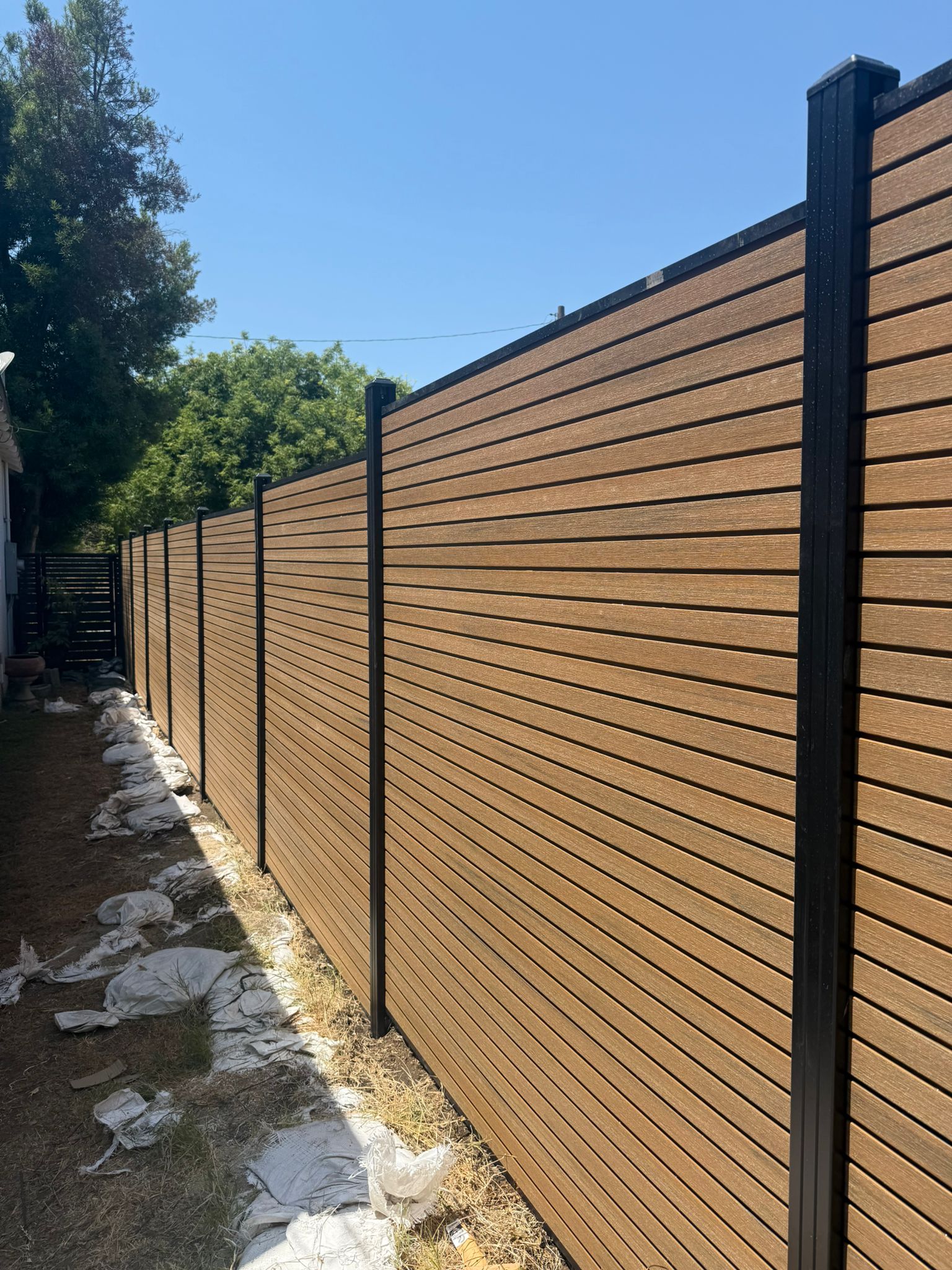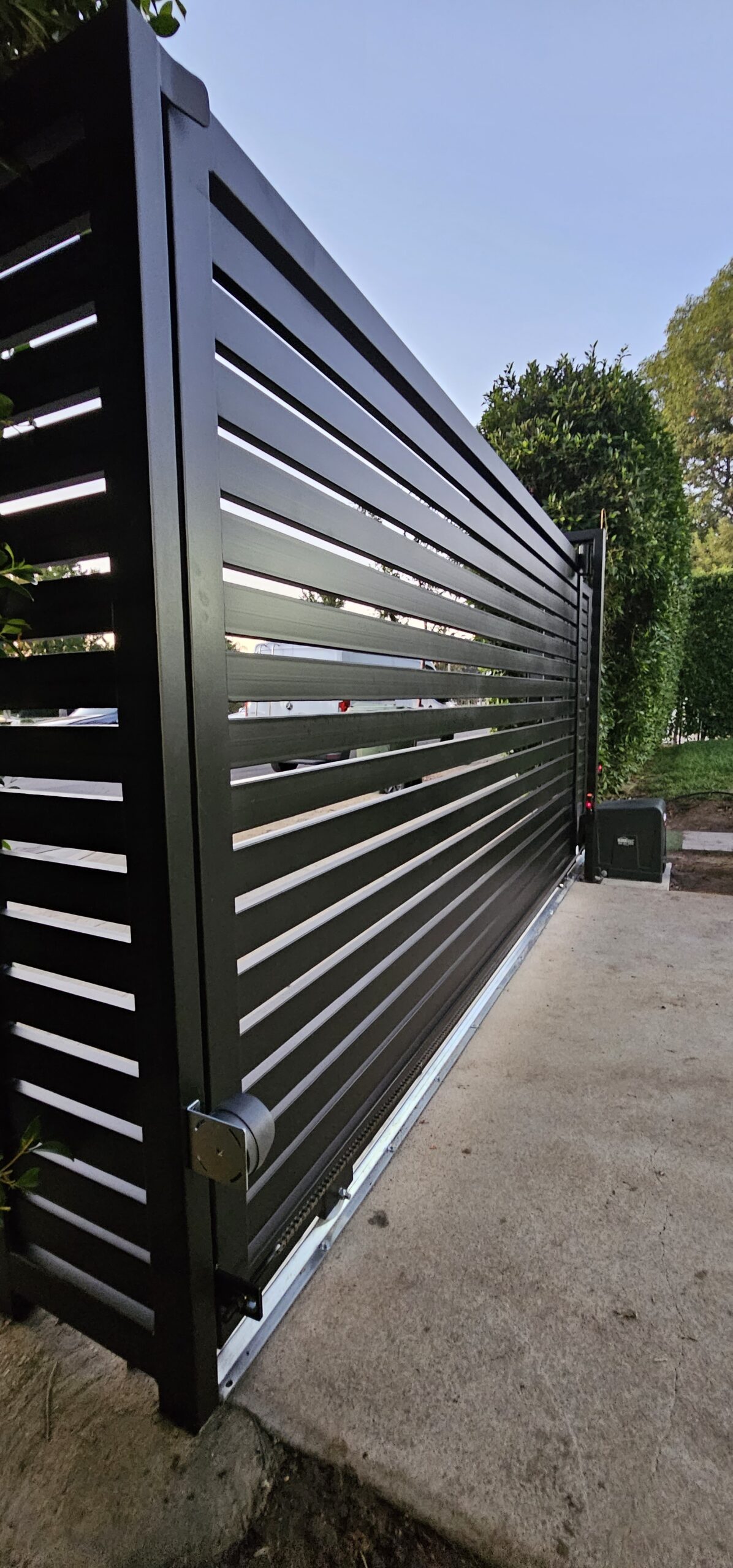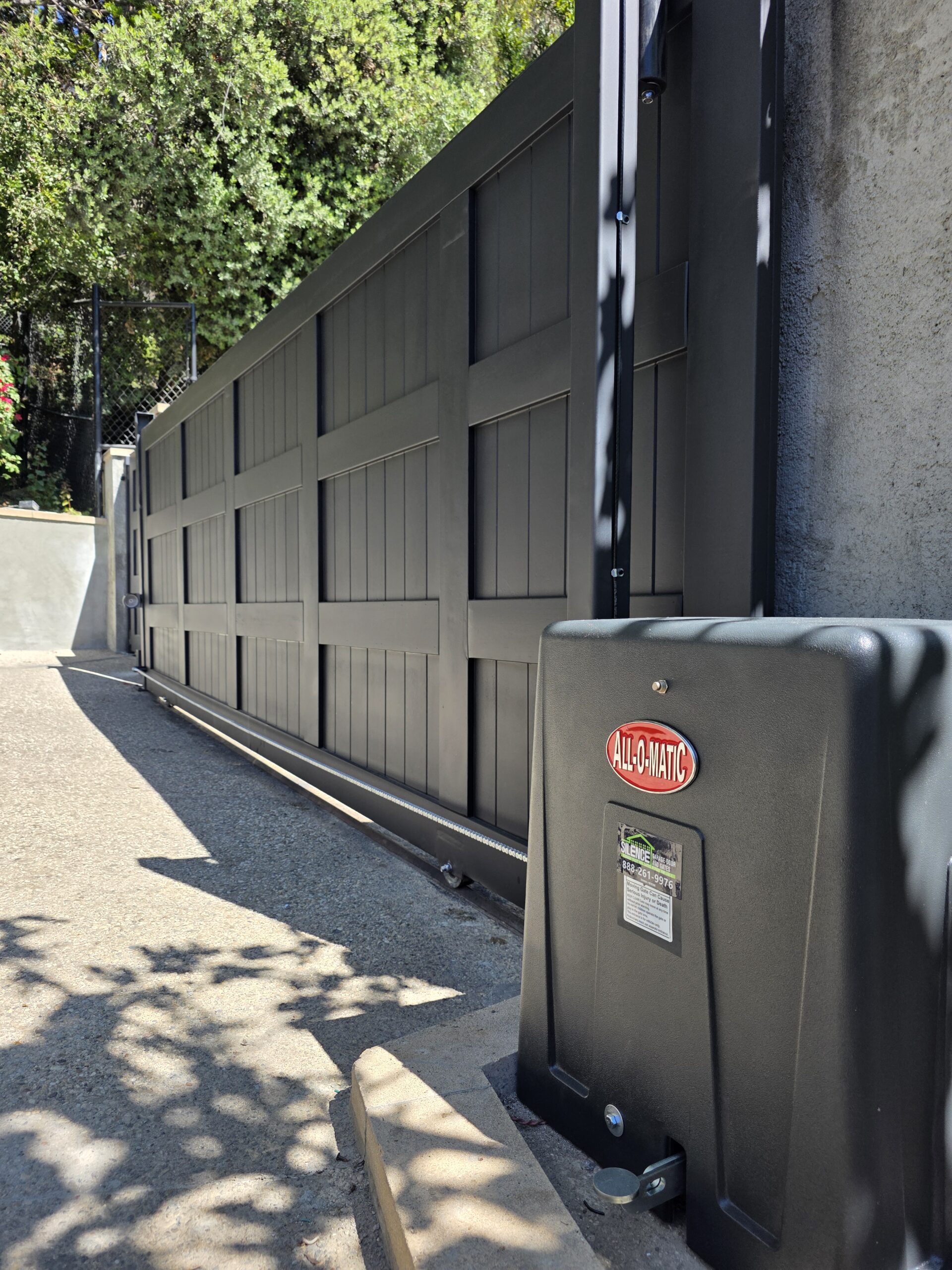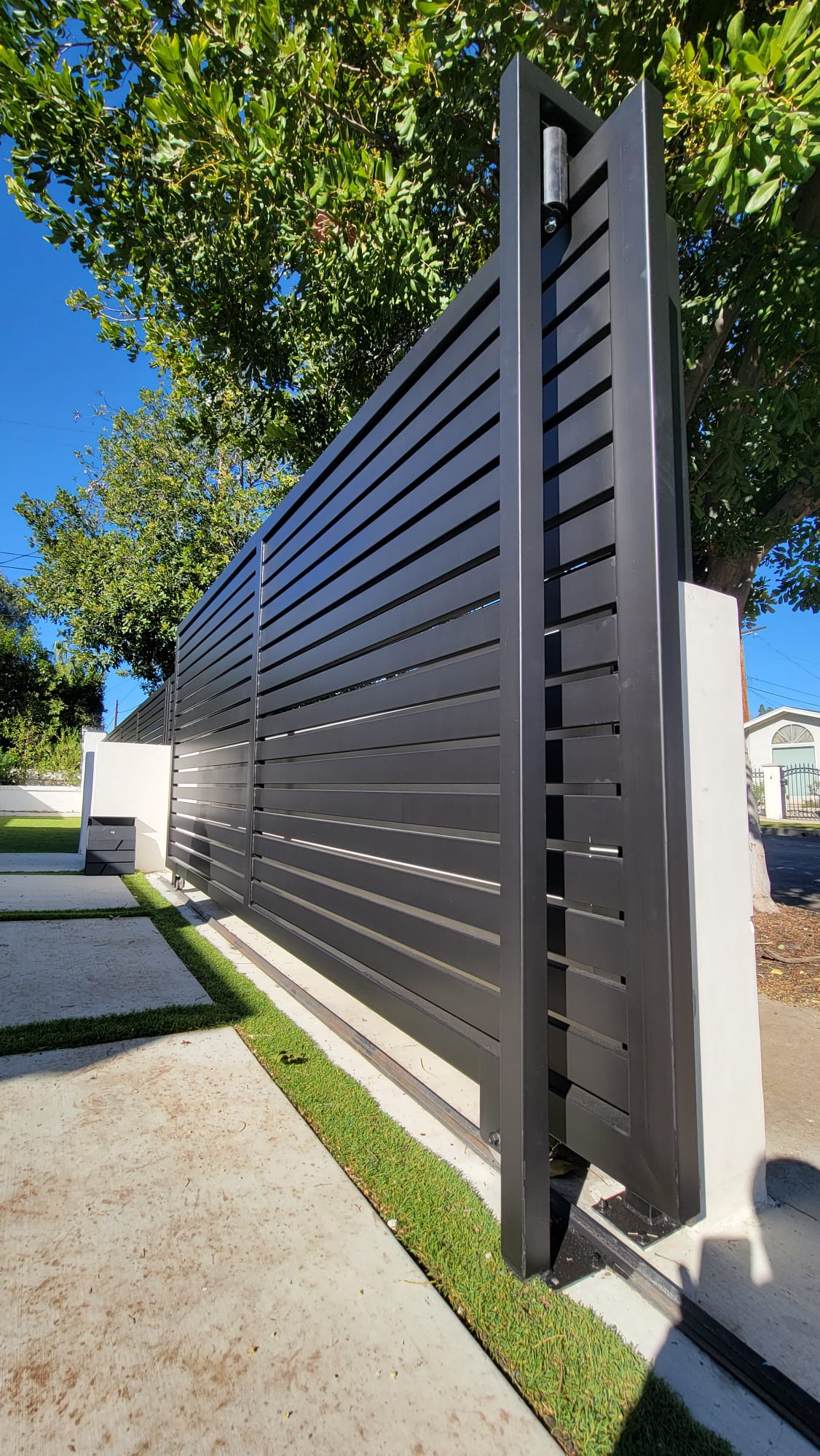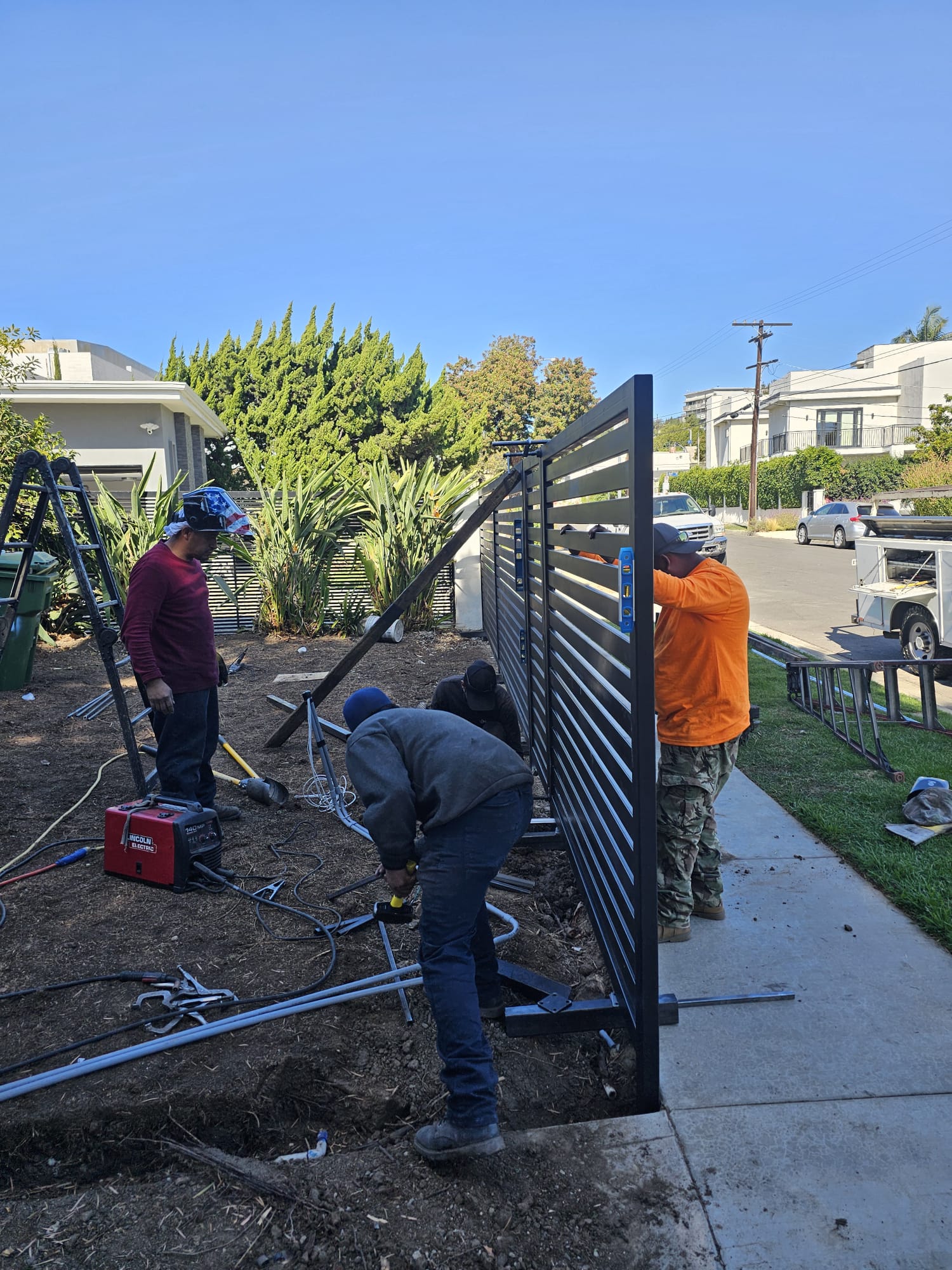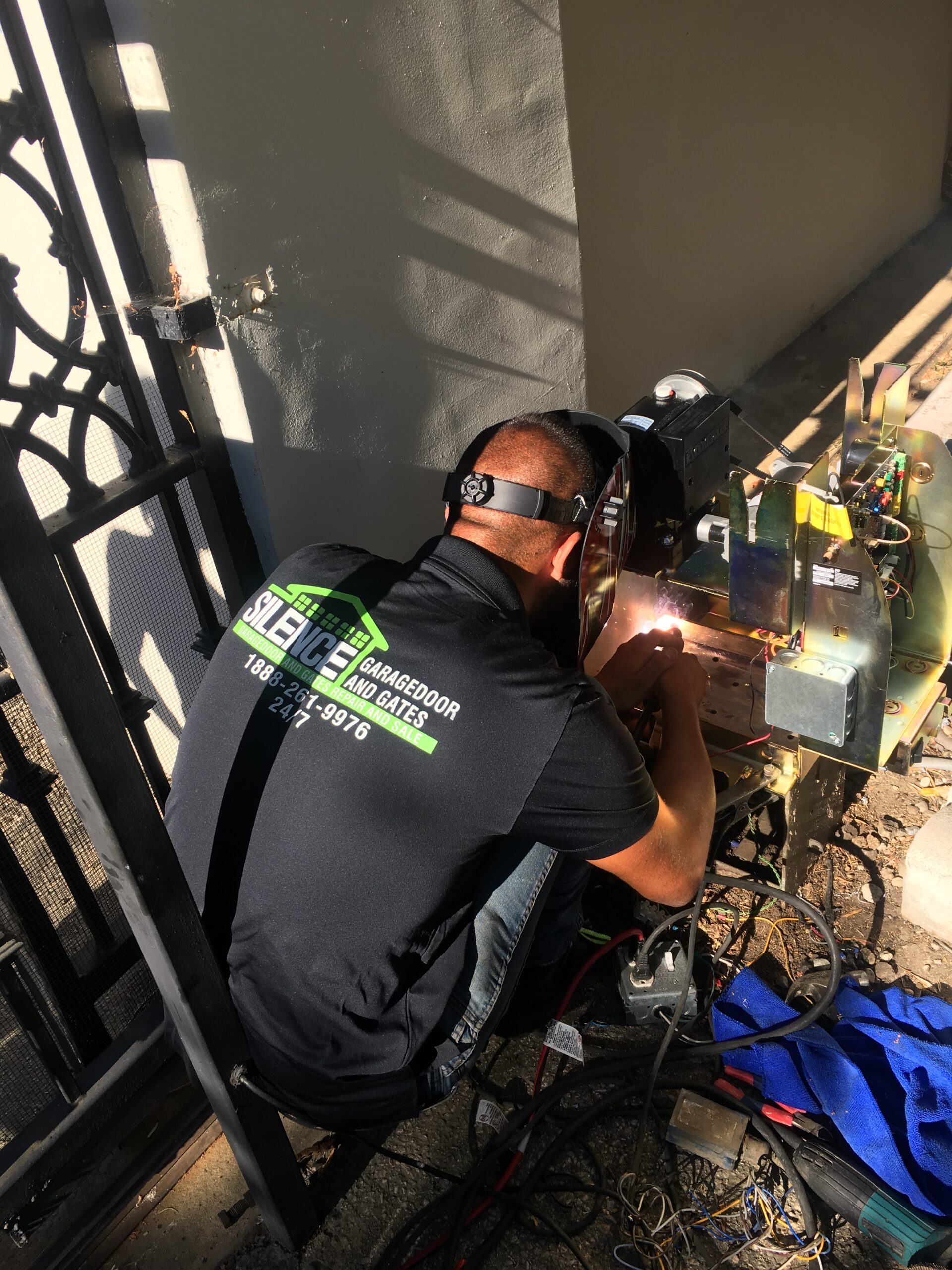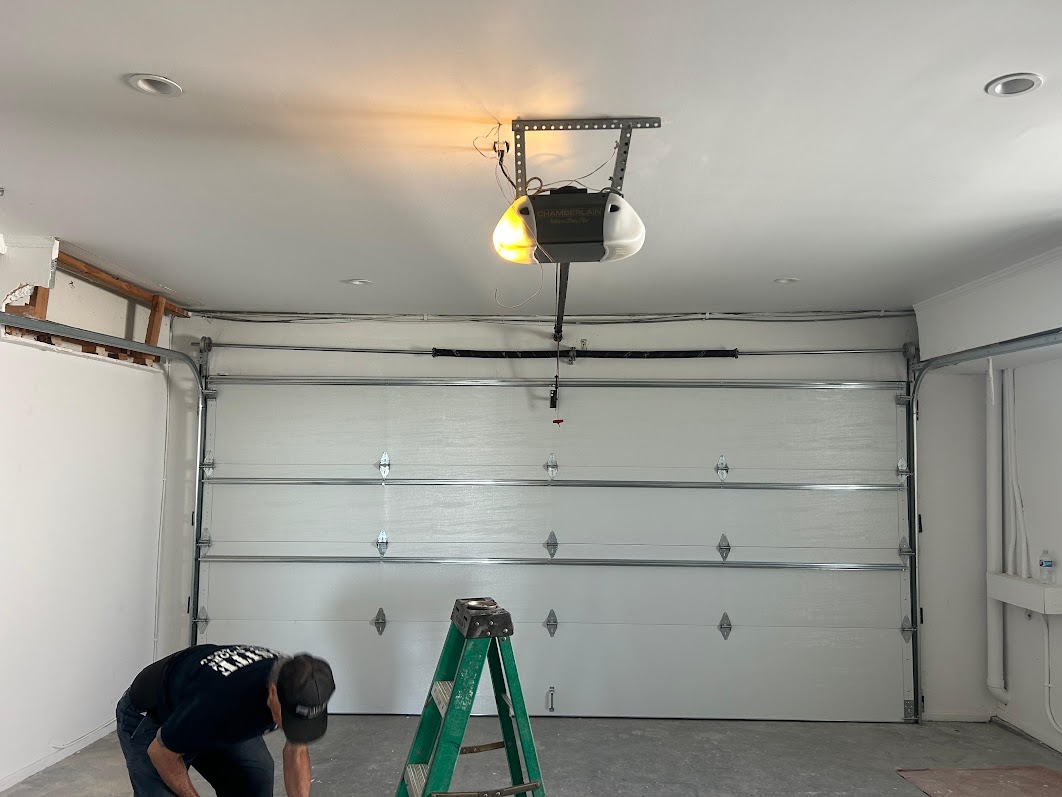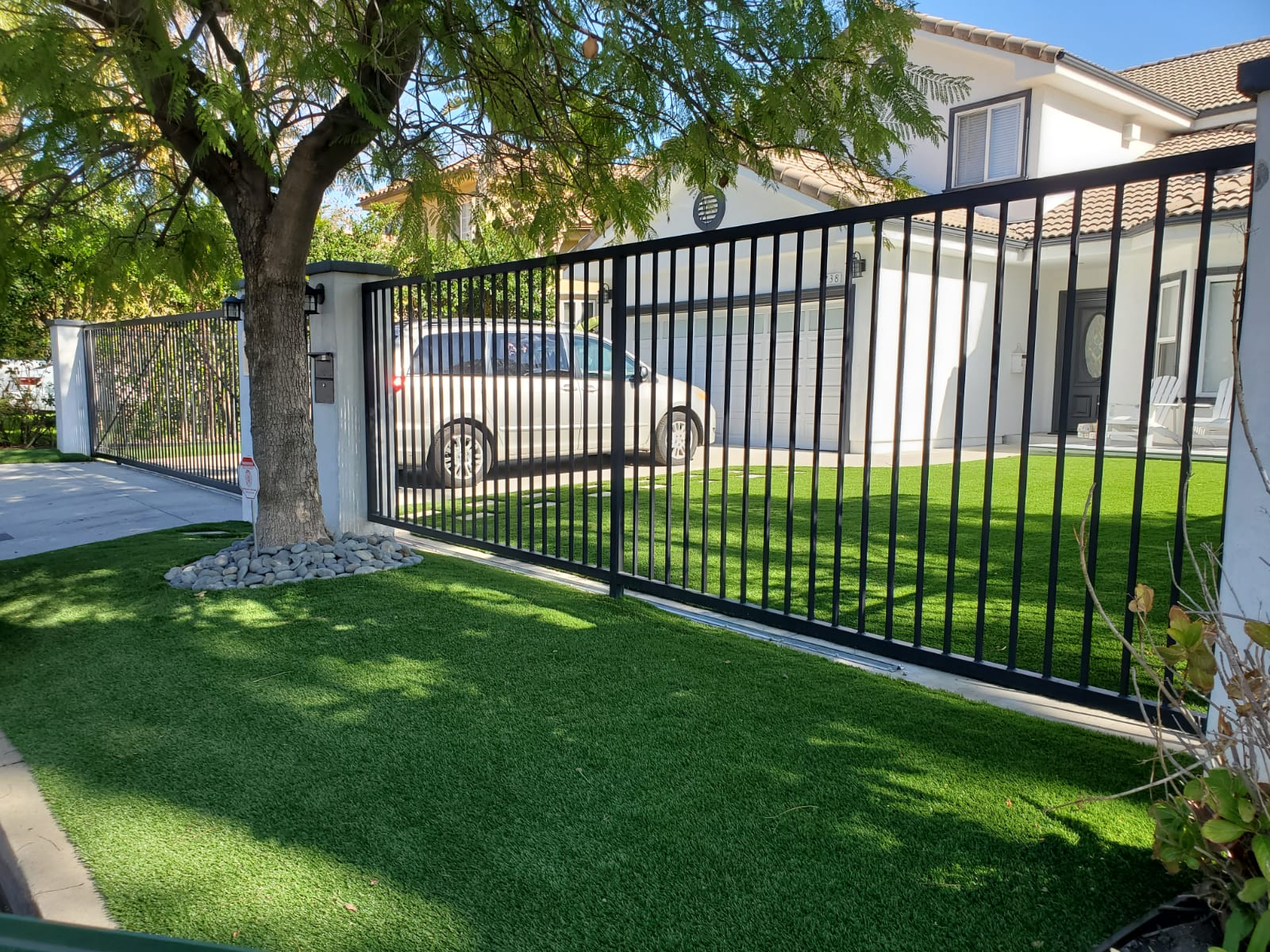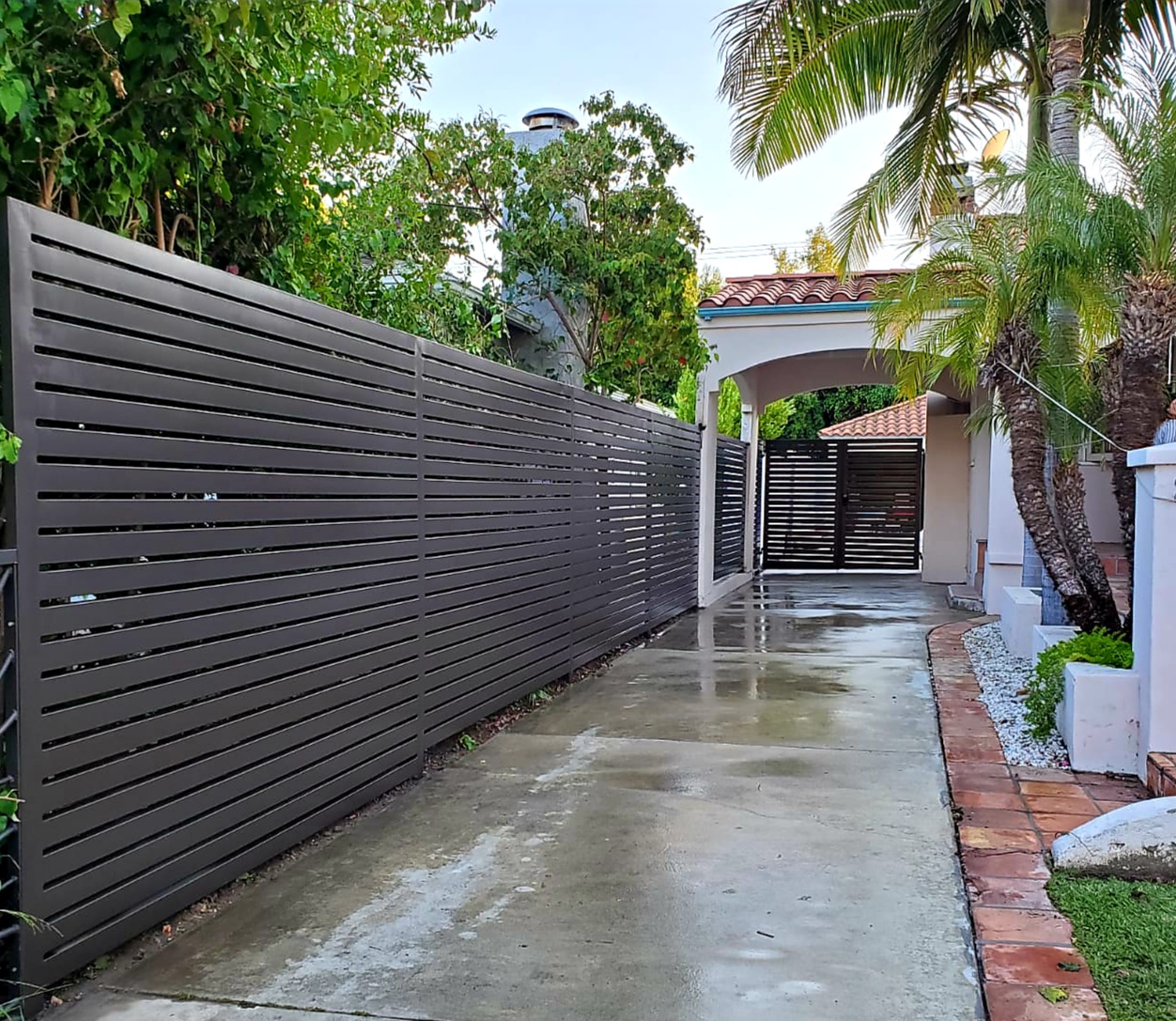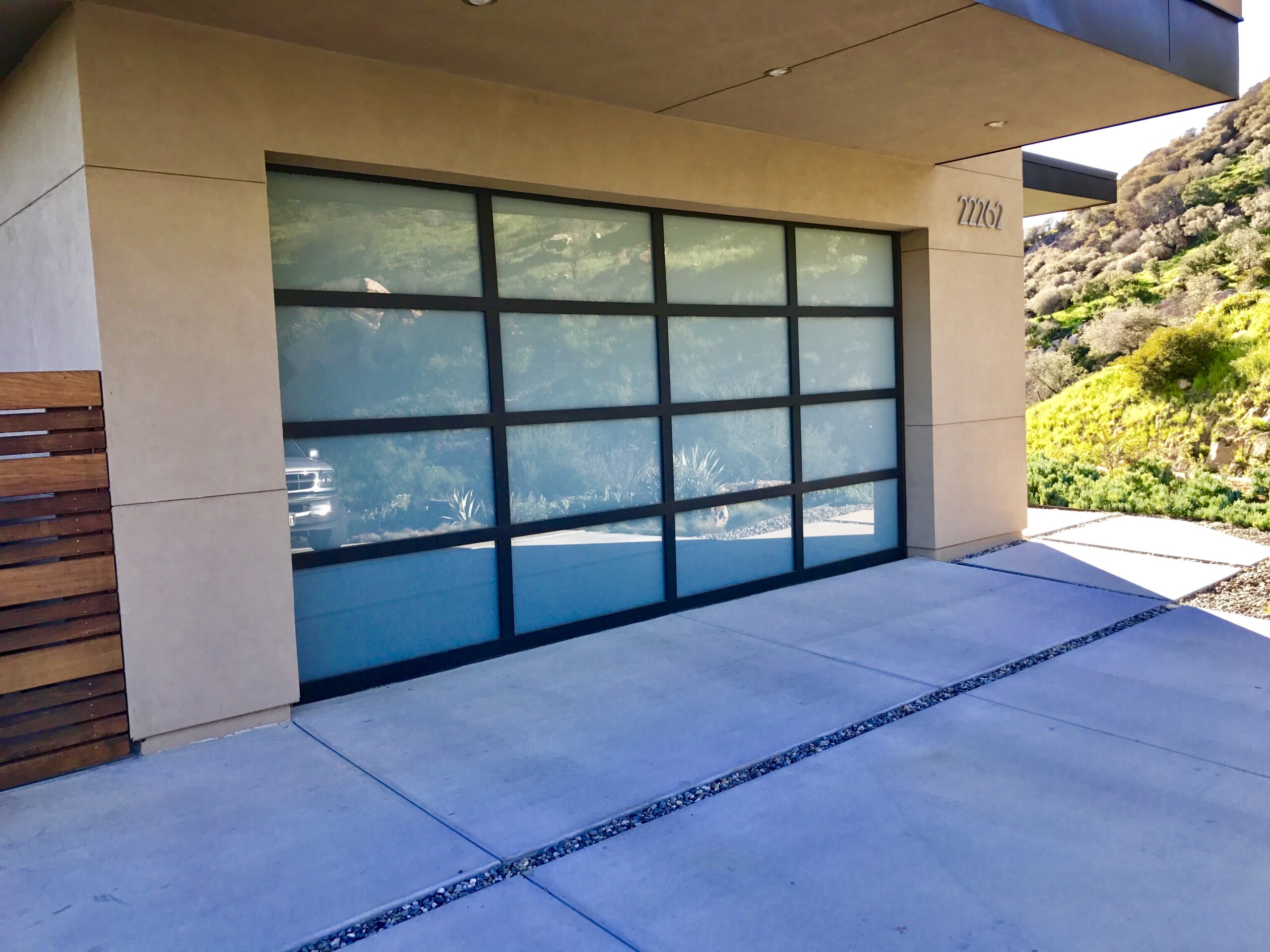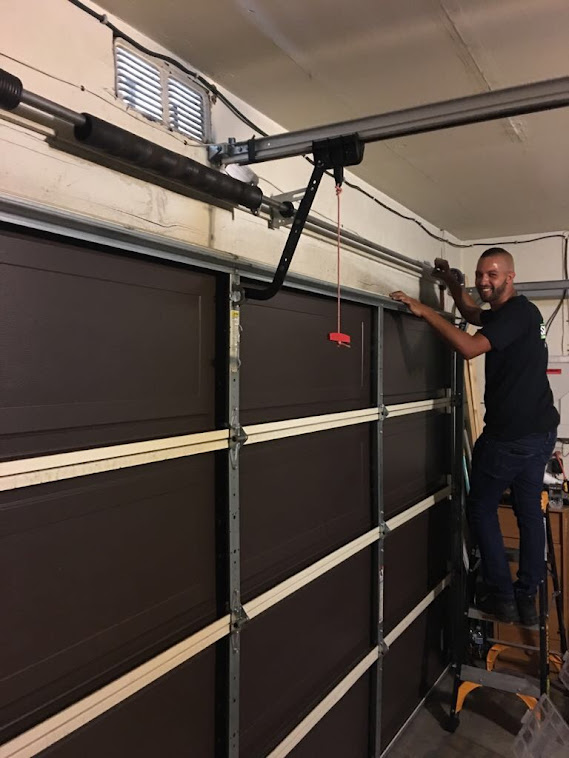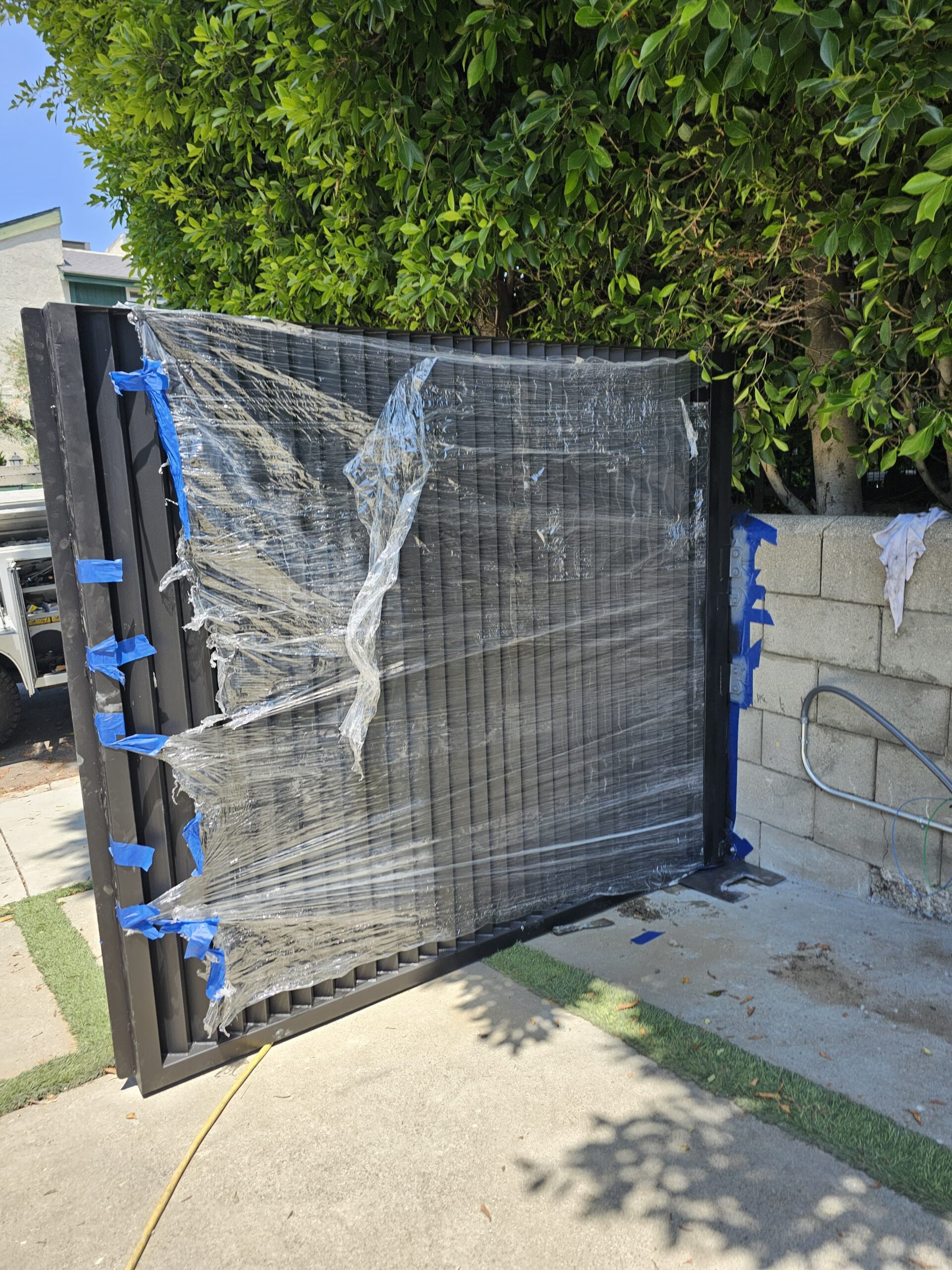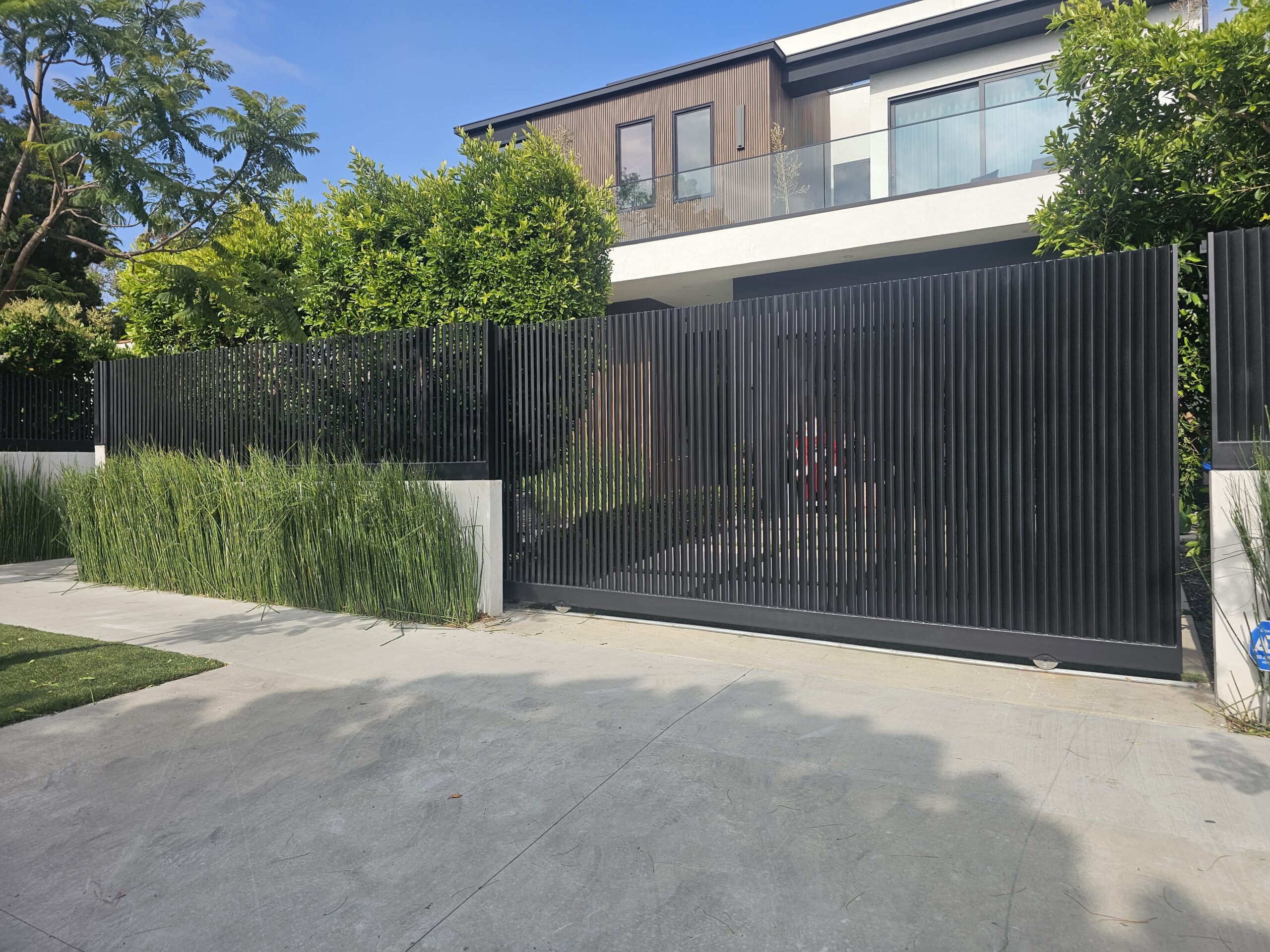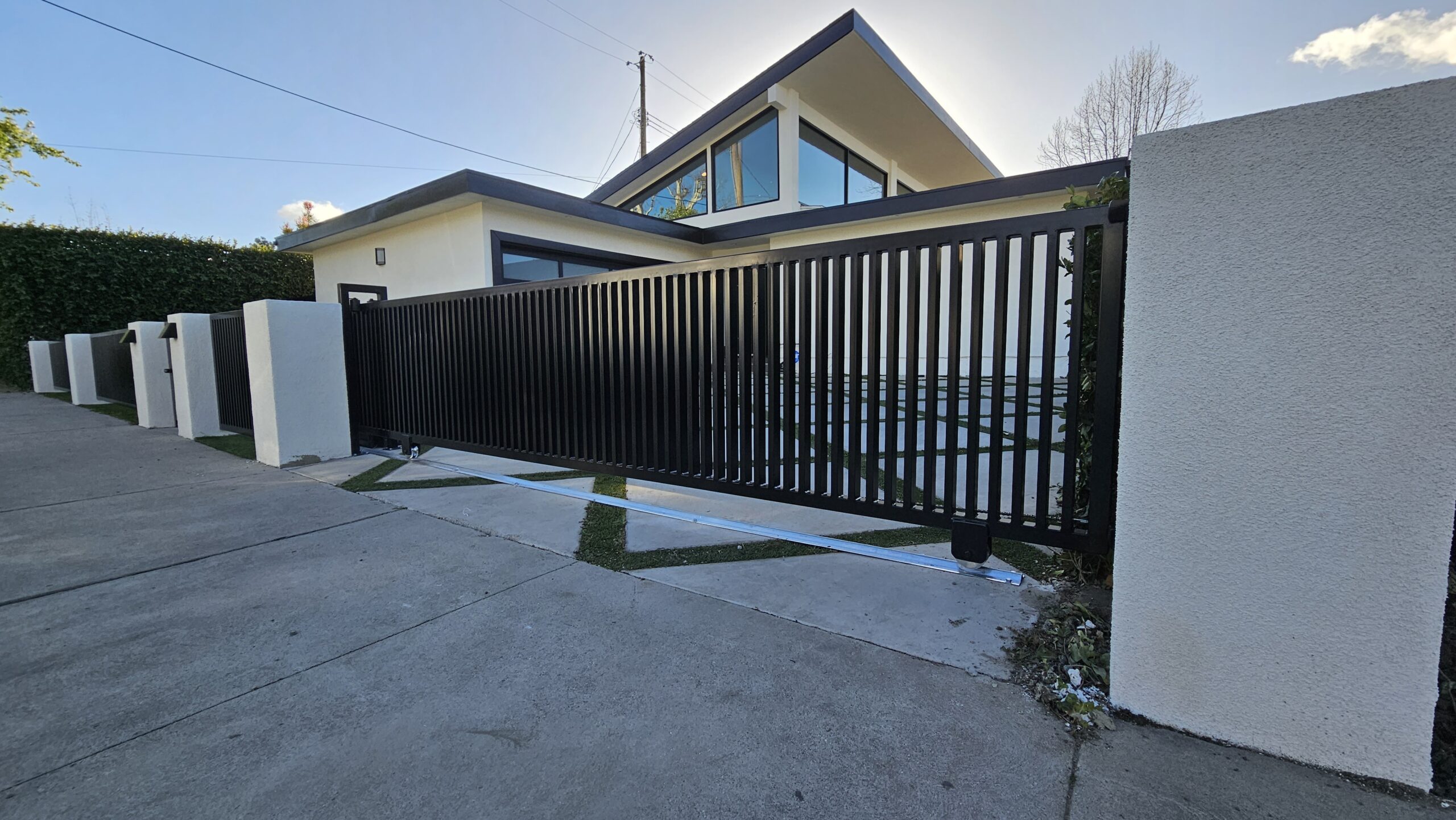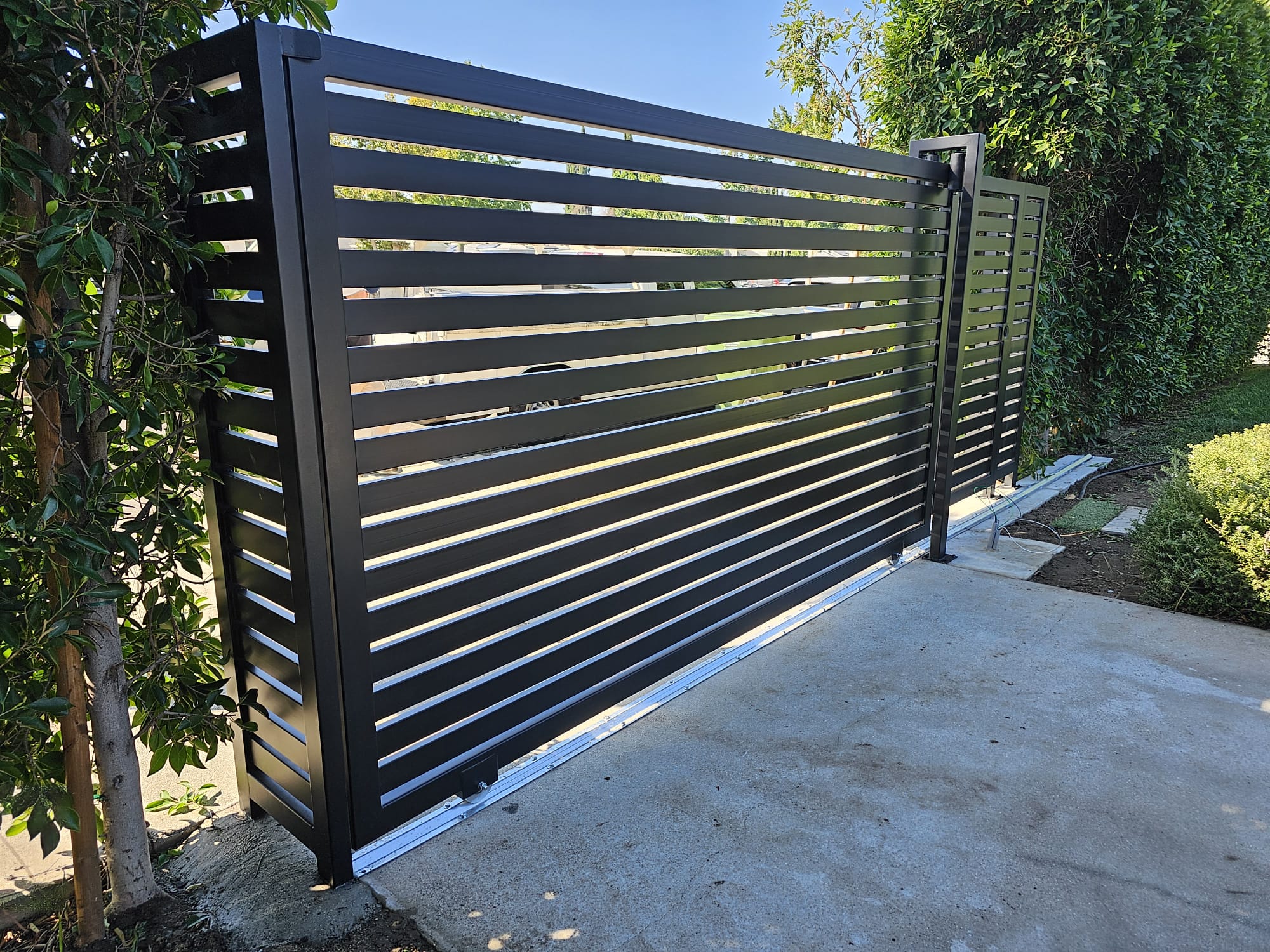
A wrought iron gate is built to outlast the house around it — and most of them try to. But iron is heavy, it lives outdoors, and it moves thousands of times a year on welds and hinges that were never meant to be ignored forever. The good news for LA homeowners is that almost nothing that goes wrong with an iron gate is terminal. A sagging leaf, a cracked weld, a rust bloom, a gate that drags the driveway — these are repairs, not replacements, when they’re caught and fixed by someone who actually welds.
Silence Garage Door & Gates has repaired wrought iron gates across Greater Los Angeles since 2010 — family-owned, CSLB #1079396, $2M insured. We repair more iron gates in a month than most companies build in a year, and the failure modes are predictable. This page is about fixing the iron gate you already have. If you’re planning a new one, our iron driveway gates project page covers custom design and fabrication.
The Sag Is Almost Always the First Sign
Iron gates fail in a sequence, and it almost always starts the same way: the gate begins to droop. A leaf that used to swing level now drags its bottom corner across the driveway; a pair of gates that used to meet cleanly now close at an angle, leaving a wedge of daylight at the top. People live with it for months, helping the gate along by hand — and every one of those forced cycles loads the weld points and the operator a little harder.
The droop is a symptom. Underneath it is usually one of three things: hinge wear (the bearing surfaces have worn and the leaf has dropped on its pivot), a cracked or failing weld at the hinge bracket or frame corner, or post movement (the column or post the gate hangs on has shifted on its footing). We diagnose which one it actually is before touching a grinder — because re-welding a gate that’s really suffering from a moving post just cracks again in a season.
What We Repair on Iron Gates
Hinges and pivots. Decade-old hinges wear, dry out, and let the gate drop. We rebuild or replace them, and where the originals were undersized for the gate’s weight we upgrade to ball-bearing hinges that carry the load and run quiet for years.
Welds. This is the heart of iron repair and the part most "handyman" fixes get wrong. A proper weld repair means grinding the failed joint back to clean metal and re-welding with full penetration — not laying a cosmetic bead over a crack that reopens the first cold snap. We re-weld hinge brackets, frame corners, picket and scroll joints, and bottom rails, then dress and refinish the repair so it disappears into the gate.
Rust. Iron in Los Angeles isn’t fighting snow — it’s fighting marine-layer humidity, sprinkler overspray, and time. Surface rust we wire-wheel or sandblast, treat with a rust-converting primer, and refinish with a matched paint system. Where rust has eaten through the bar stock, we cut out the affected section and weld in fresh material — a structural repair, not a paint job over a problem.
Bent and damaged sections. A bumper tap, a fallen branch, a forced entry — bent pickets, crushed scrollwork, knocked-loose finials. We straighten what can be straightened and fabricate replacement elements to match the original profile where it can’t.
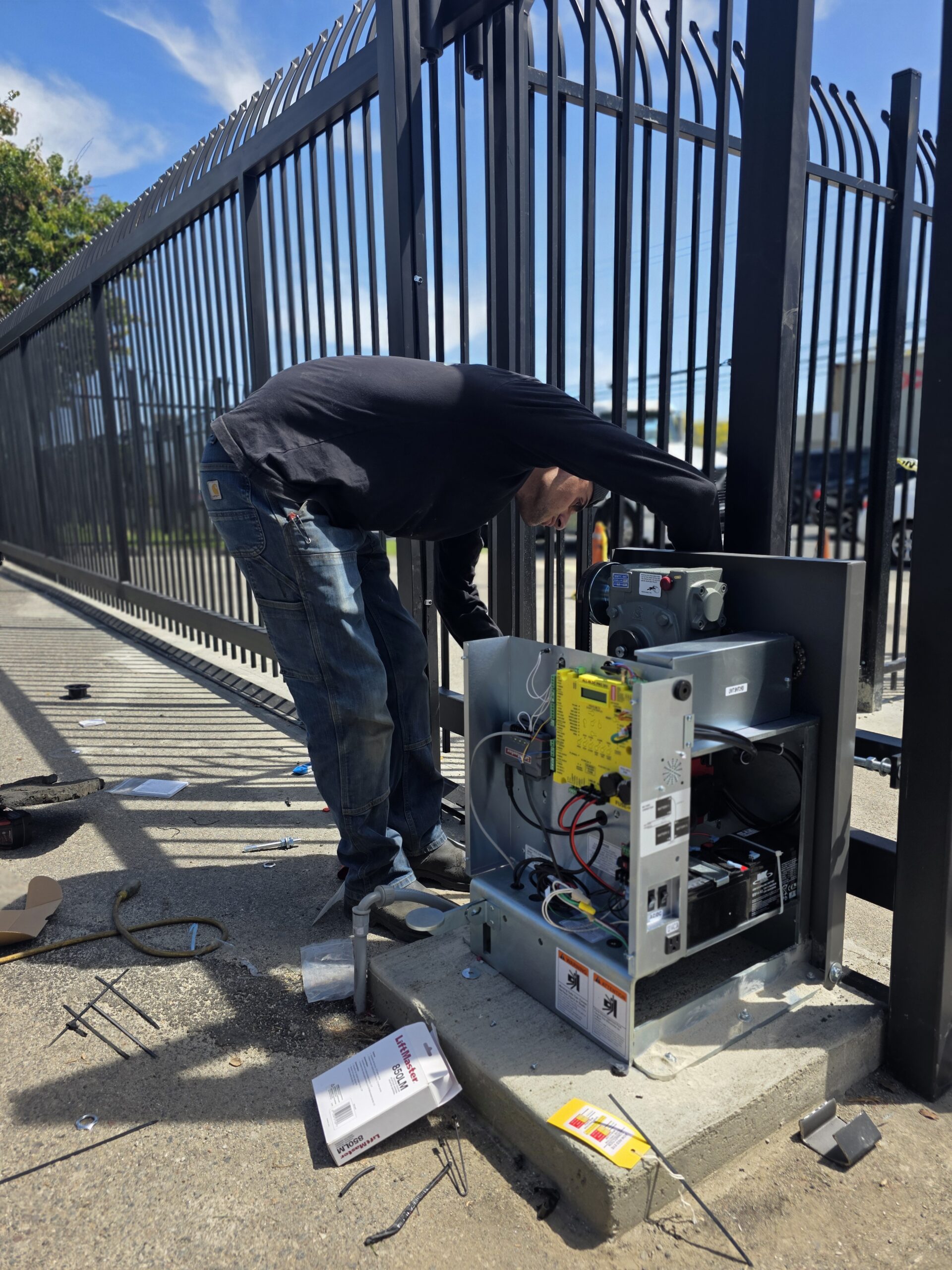
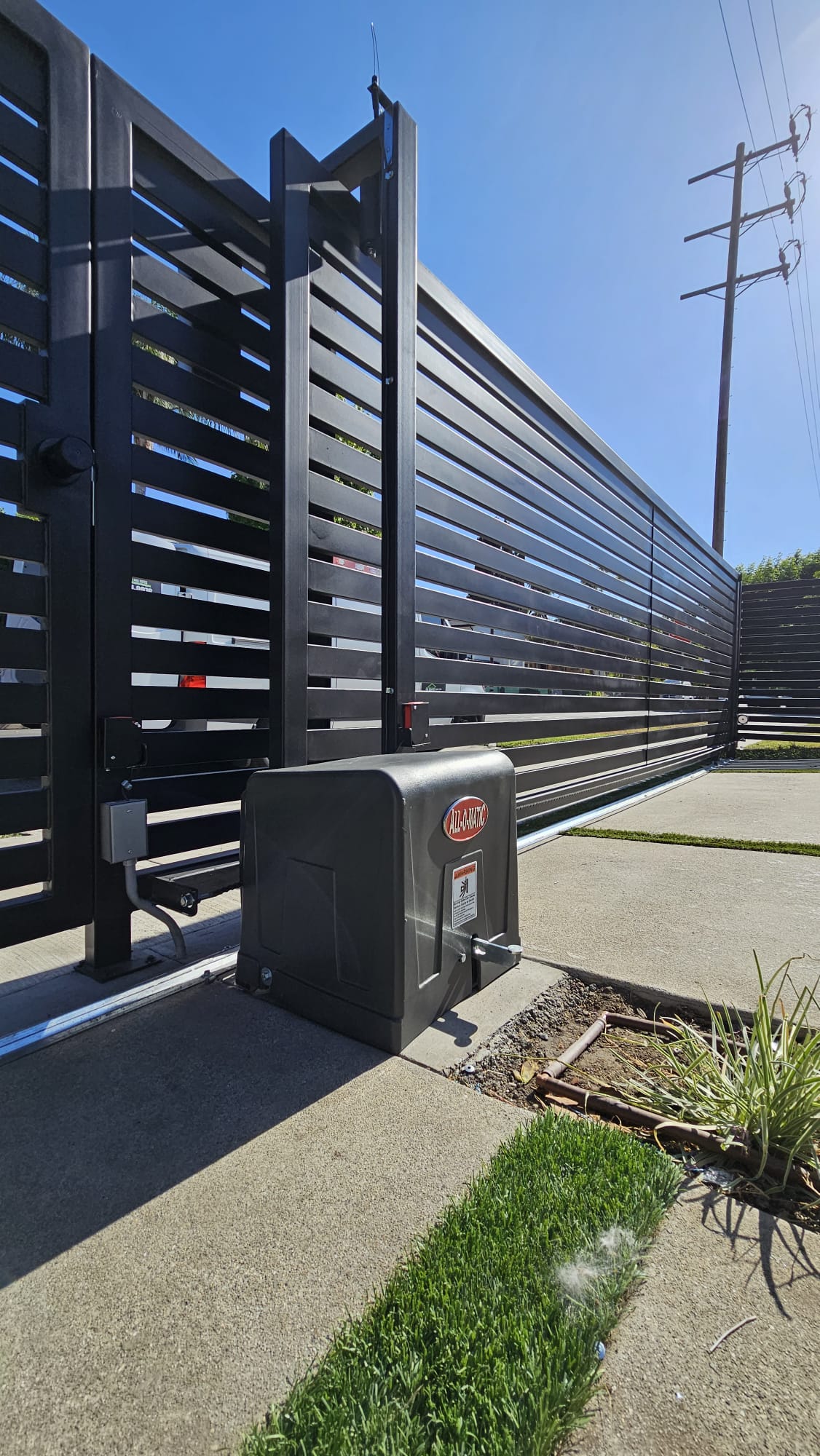
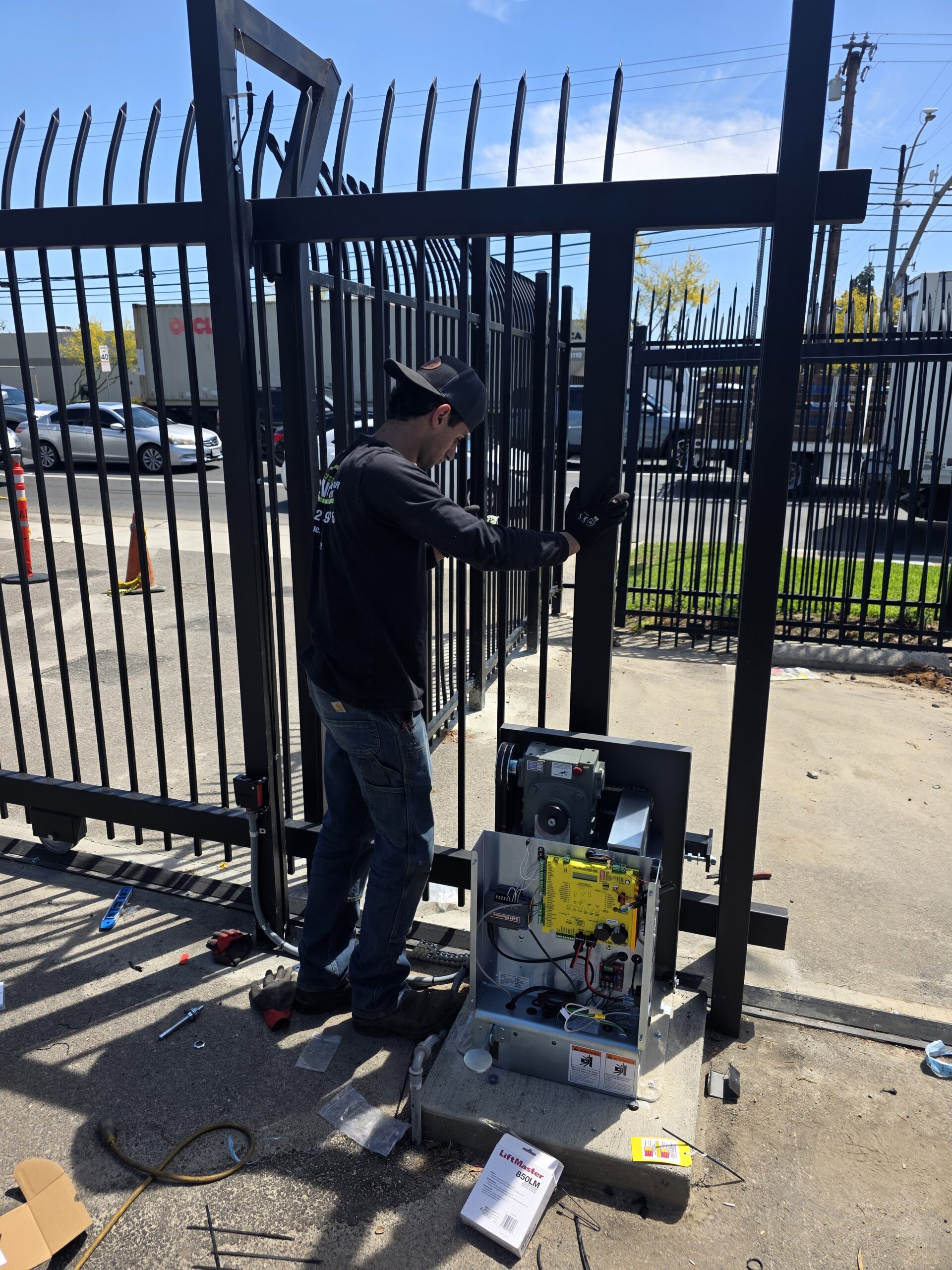
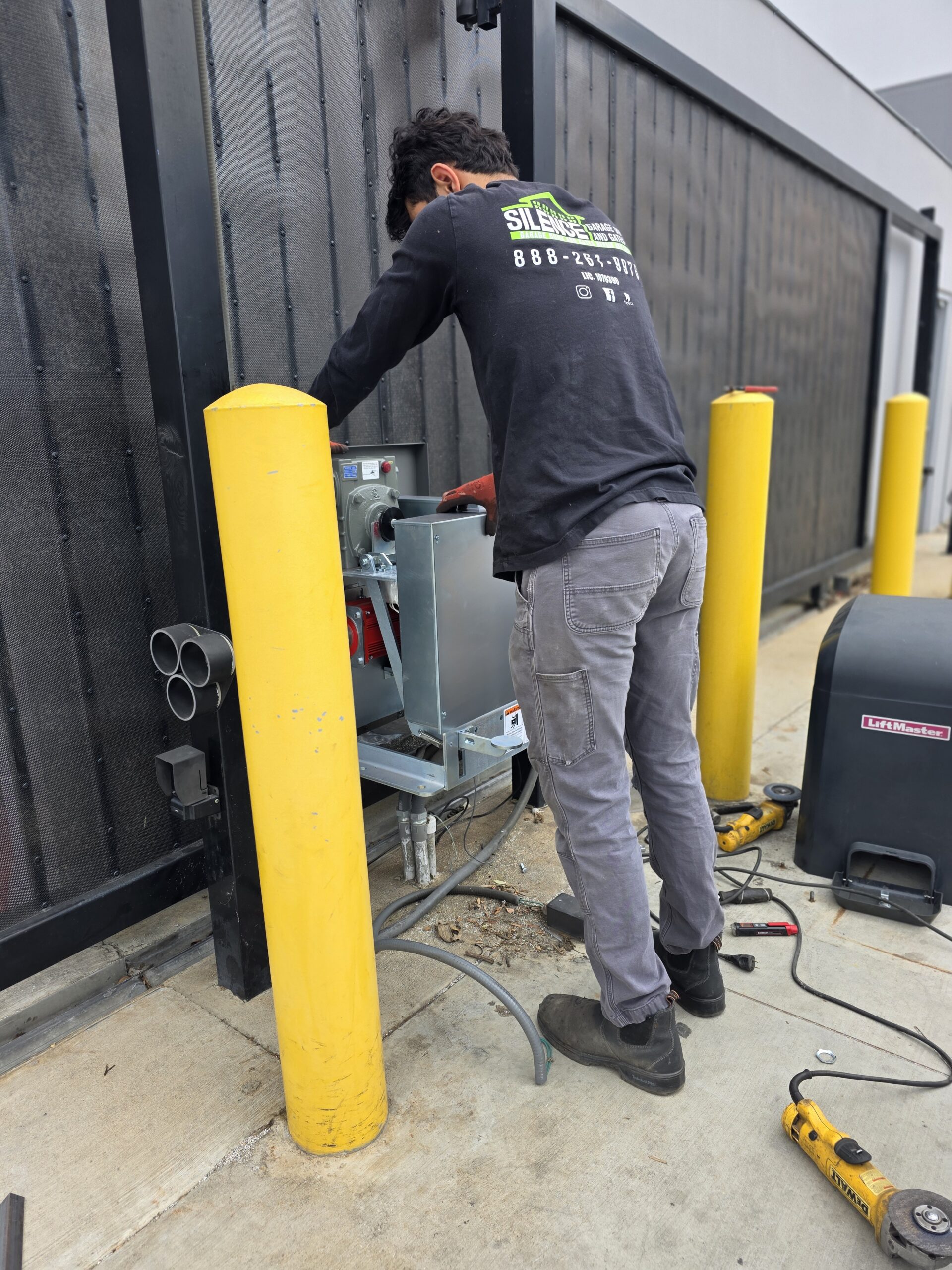
Operators on iron. A huge share of iron-gate trouble is really an operator mismatch: someone hung a light-duty residential operator on a heavy iron gate, and it’s been straining and failing ever since. The fix isn’t a stronger spring on the wrong unit — it’s the correct-spec operator, re-run safety devices, and a properly bonded gate. We service operators from All-O-Matic, LiftMaster (both authorized), FAAC, DoorKing, Ramset, Eagle, and Viking on iron gates; the deeper operator-electronics work lives on our automatic gate repair page.
Refinishing: Where Iron Repair Becomes Invisible
The difference between a repair and a good repair is whether you can see it afterward. Every weld and rust repair we do is dressed back smooth and refinished to match the surrounding gate — primer, matched topcoat, and the same finish texture — so a re-welded corner or a patched bottom rail blends into the original ironwork instead of announcing itself. On gates with heavy decorative detail, that finish work is most of the craft.
Why "Someone Who Actually Welds" Matters
Plenty of gate companies will bolt a bracket over a cracked weld, hang a bigger spring on a tired operator, or paint over rust and call it done. Those fixes buy a few months. Iron is structural — the welds carry the gate, and a cosmetic patch over a failing joint is a crack waiting to reopen, usually larger. Our repairs are done by people who weld iron for a living: clean the joint, full-penetration weld, dress, refinish, and verify the gate swings true and the operator isn’t fighting it before we leave. It’s the difference between a gate you stop thinking about and one you call about again next year.
Residential, Commercial, and HOA Iron
We repair iron gates for single-family estates (the custom driveway gates that define a property’s street presence), commercial properties (heavier iron entries and security gates), and HOAs and property managers (community iron gates and recurring maintenance). For multi-property portfolios we hold maintenance contracts with COIs on file and the same crew on every visit — the arrangement in our HOA and property-manager guide.
Where We Work
Iron gate repair across Greater Los Angeles — the estate neighborhoods where iron is the default (Beverly Hills, Hancock Park, Bel Air, Sherman Oaks), plus the rest of the Westside, Valley, South Bay, and East side. Estimates are free, on-site, and carry no obligation — we walk the gate, find the real cause, and put a written quote in your hands. Call 24/7 at (888) 261-9976. If a new gate is the better answer, our iron driveway gates project page covers custom builds; for other gate types, our driveway gate repair service covers steel, aluminum, and wood.
Family-owned Silence Garage Door & Gates — Los Angeles since 2010. CSLB #1079396 · $2M insured. Free estimates, no pressure. Call (888) 261-9976 or message us here.